Throw a Rock in Seoul, Hit a Model. But Do You Got 개성 (Gaeseong)?
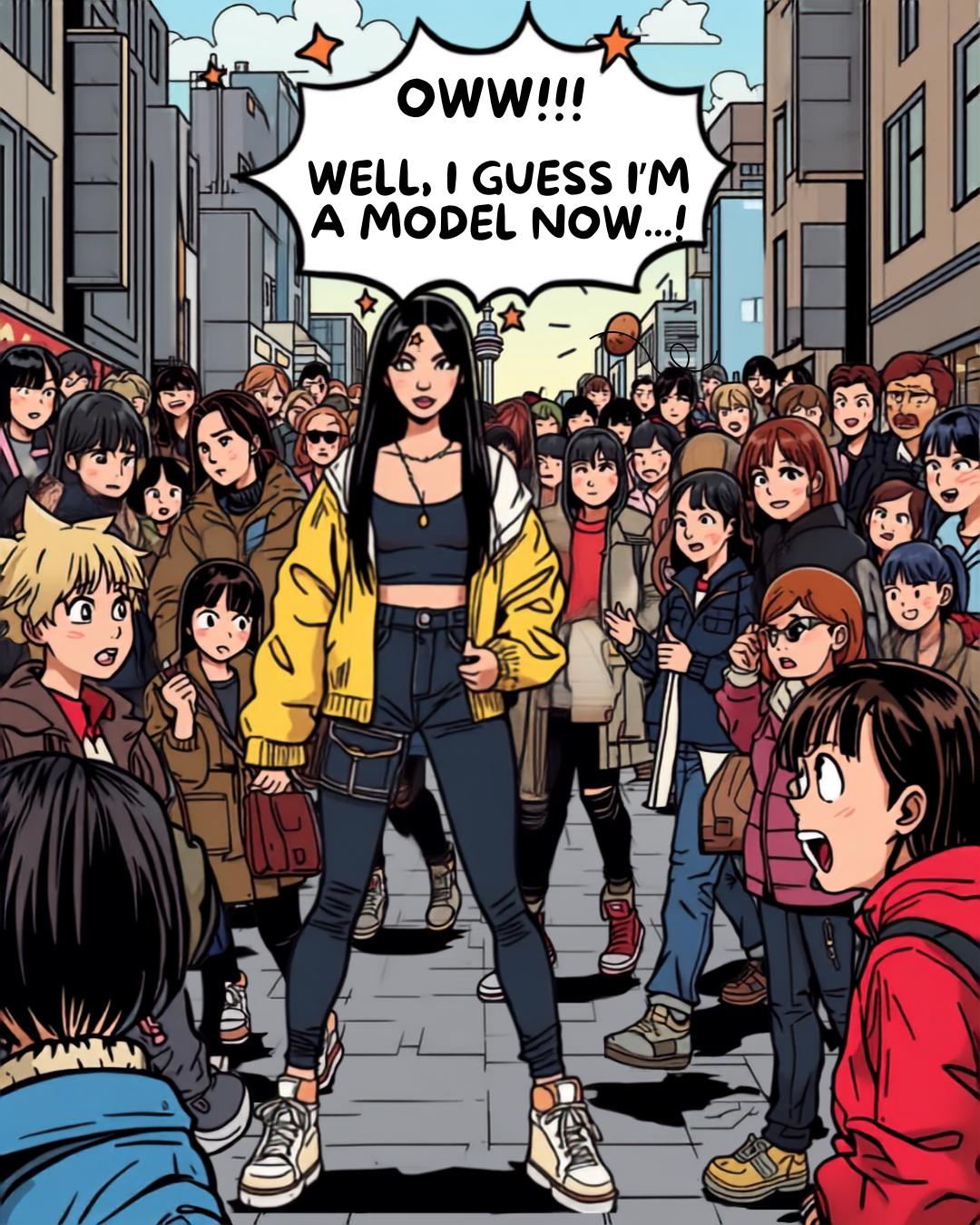
There's an old saying about Korea: throw a rock in Seoul and you'll hit a Kim.
It's a joke about the density of the country's most common surname — roughly one in five Koreans carries it — but it's really a joke about compression. About what happens when a lot of very similar things occupy a very small space.
Throw a rock in Seoul in 2025 and you'll hit an aspiring model. Or at minimum, someone who is 165 cm, noticeably thin, and remarkably pretty in a way that would turn heads in most cities on earth. This is not an exaggeration. Seoul has, through some combination of genetics, skincare culture, beauty infrastructure, and the relentless visual training of an Instagram economy, produced a population density of conventionally attractive people that is genuinely unprecedented. Anyone who rides the Seoul subway knows this already. You could pull almost anyone off a car on Line 2 during rush hour, put them in the right lighting with the right makeup, and produce something that looks like a K-pop promotional still.
That is the market you are trying to model in. And the person trying to model in it — the person standing next to you at the open call, and the one next to her, and the one next to her — looks something like this:
165 cm tall
25 years old
53 kg
245mm shoe size
Korean dress size 55 or 66
Shoulder-length hair
Pretty enough to get attention in any bar or club
Constantly complimented on their looks by Koreans
That's the pool. That's who you're competing with. Not one or two of them — a roomful.
So the question isn't whether you're pretty. In Seoul, pretty is the minimum — the thing everybody already has, the price of admission just to be in the conversation. The question isn't whether you photograph well. In a city that has essentially trained its entire population in front of smartphone cameras since adolescence, photographing adequately is the floor, not the ceiling. The question — the only question that actually matters once you're past those gates — is what makes you stand out in a market where the person standing next to you on the subway could do this job too.
If you don't have a clear, immediate, legible answer to that question, you don't have a modeling career. You have a hobby.
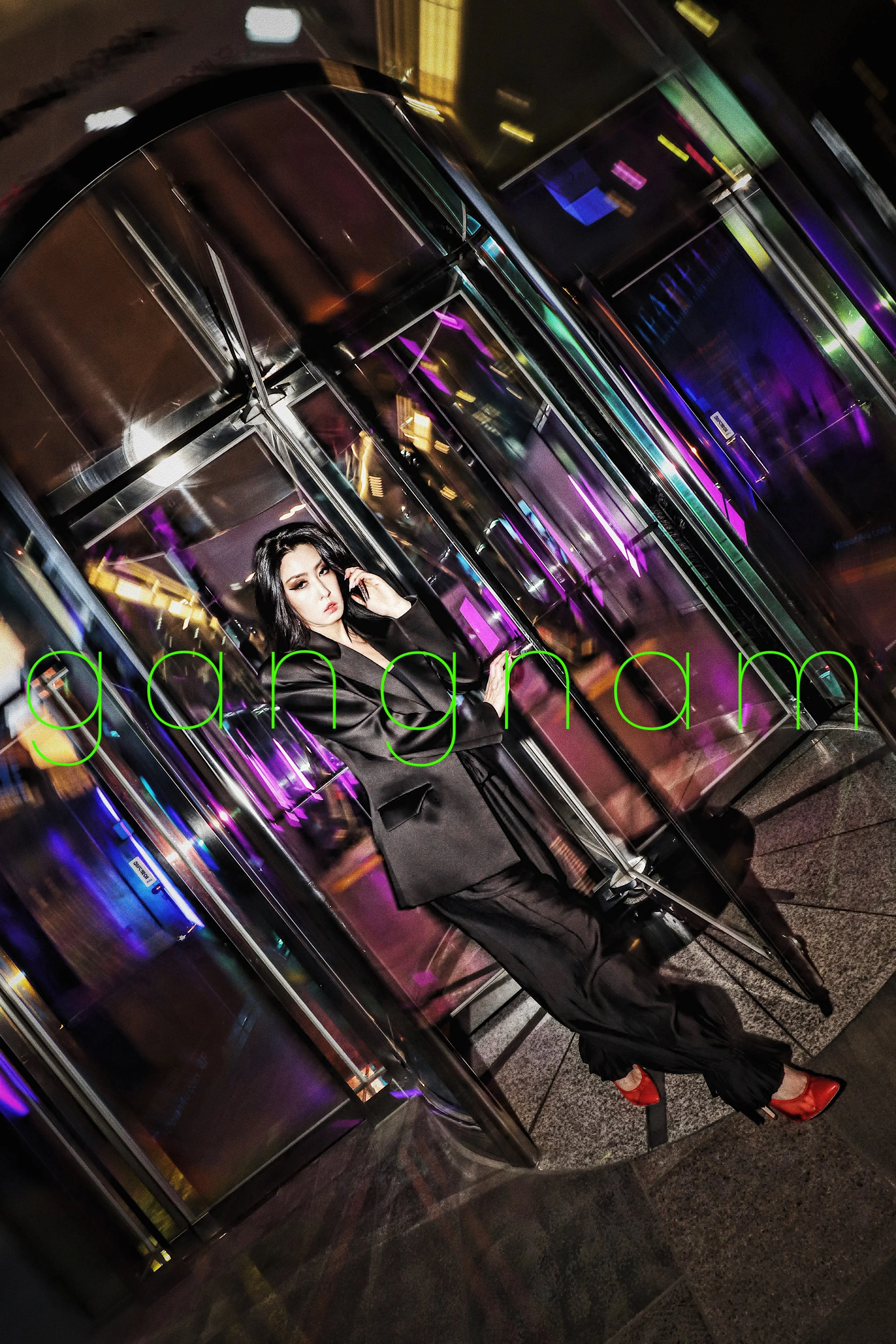
Senior model @yoon_9hn, courtesy of Elite Model Agency @ema_model_official. For the UNCUT SEOUL project.
Now look at this model, @yoon_9hn.
She's not standing in a revolving door. She is bursting through one — all in black, red heels catching the light off wet pavement, city neon smearing behind the glass — moving through what looks like a corporate tower or business complex lobby the way a CEO moves through a boardroom she already owns. There is nothing tentative about her. There is no asking permission. The door is turning because she decided it should turn. She is not smiling. She is not trying to be approachable. She has what the internet has helpfully named RBF — Resting Bitch Face — and in this context it is not a liability. It is a credential. She looks like Gangnam. She looks like the woman PSY was simultaneously satirizing and celebrating in "Gangnam Style" — the one who exists in that video as the aspirational object of the whole joke, the cold, immaculate, high-status Seoul woman who does not need to perform warmth because she is already the room. She looks like she owns the revolving door. She looks like the city built the door for her specifically.
Her agency — Elite Model Agency Korea — sent her for this specific shoot, for this specific neighborhood, because they knew exactly what she was. They knew what to do with her before she walked in the room. She is 56 years old — and she looks half that. That is not incidental. That is the whole point. That is her thing; her specific and irreducible visual proposition: the ageless Gangnam model (@yoon_9hn), immaculate and untouchable, who carries the weight of decades without showing a single one of them. It is precisely that quality — not just her face, not just her bearing, but the specific combination of age and the appearance of youth, of power and the appearance of effortlessness — that gets her booked for certain things and that other models in her age category, without that quality, simply do not get booked for. Her look is legible. Her feel is legible. You know within three seconds of seeing her exactly what she is and exactly what you would do with her.
And that is the point. When the neighborhood of Gangnam came up as a concept for this project, the agency's lead manager did not have to think. She had a mental roster — organized by feel, by energy, by visual proposition — and @yoon_9hn's name surfaced instantly. That is what a legible visual brand produces on the agency side: a booker who can place you without deliberating. Every serious modeling manager should be able to run down a short list of things they can do with you the moment your name comes up. If they have to think too hard, that's great for the model, great for you.
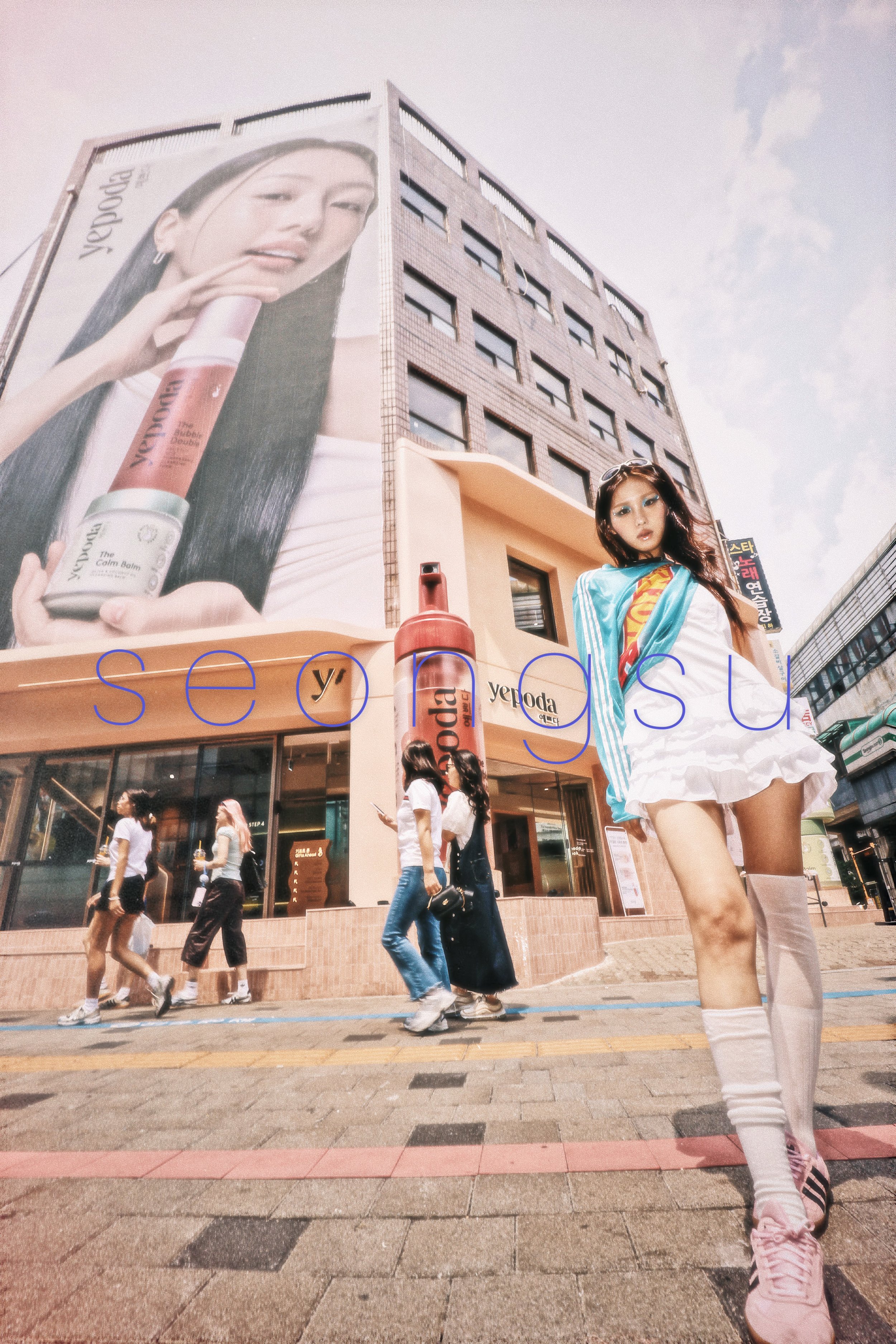
Model @rose.0__, courtesy of Elite Model Agency @ema_model_official. For the UNCUT SEOUL project.
Now look at the second image. Seongsu-dong. A completely different model — @rose.0__ — a completely different visual language. High energy, street-native, color-forward, youthful without being naive. Where @yoon_9hn is still and controlled, this one is kinetic — she belongs in Seongsu the way the industrial-chic cafes and the sneaker boutiques belong there, like someone put her there on purpose. Which, conceptually, they did. Her look is not dark or rarefied. It is bright, accessible, alive to the street around her. She is standing in front of a beauty brand billboard several stories tall and she is not dwarfed by it — she is in conversation with it.
A different booker call. A different client list. A different set of campaigns and concepts she fits with zero deliberation. Same principle: you look at her and you immediately know. Two models, two entirely distinct visual propositions, both legible from across the room. That is the range a good agency roster needs to cover. That is also exactly what makes each of them individually valuable — they are not interchangeable. They cannot sub for each other. They each own their lane completely.
That's the thing nobody tells aspiring models. That's the piece that gets left out of every agency open call, every casting tutorial, every "how to make it in modeling" breakdown you've ever read.
Your look gets you through the door. Your 개성 (gaeseong — personality, individuality, the specific flavor of you) gets you booked. But before any of that can happen, someone in a room needs to be able to just look at you and immediately know what to do with you.
If they can't? You don't get booked. You get "we'll keep you in mind."
The Threshold Problem
Every agency open call attracts a specific category of human being. They are tall. They have certain proportions. Their faces do something interesting in the light. This is not rare — not anymore, not in Seoul, not in this city with a high-functioning beauty industry and an Instagram economy that has trained an entire generation to be camera-aware from adolescence. The people who make it past the first cut all have the physical qualifications. All of them. Height, frame, features, skin — that's the floor, not the ceiling.
The modeling industry itself knows this, even if it doesn't say it loudly enough.
"Personality is the only thing that separates you from other talent in this industry," says Latitude Talent, a management firm that coaches working models. "If you want to be booked and busy, you need to be someone that clients want to work with and that want to book you not for just one job, but consistently."
Francis Arden, director of MSA Models' Los Angeles office, is even more direct. He told Backstage: "If you have a quirky personality, we want to know that. We want to know who this person that we're sitting in front of is. Yes, she's got the right measurements, but what's in there? What's her purpose? What drives her?"
“Yes, she's got the right measurements.” Read that again. He's saying measurements are the thing everybody has — the basic requirement that gets you into the room, not the thing that wins the room.
Fashion week casting agents have built this into their actual assessment process. For over half the jobs they fill, they put candidates in front of a camera specifically to watch what happens to their personality under lens pressure. Casting director Jym Benzing told Backstage exactly how he does it: he asks candidates to tell him embarrassing stories. He asks about their prom date. "I just want to see how you react. Are you willing to be honest? To have personality?" And crucially — he's timing the whole thing. Models who come prepared and move with intention free up his time to actually talk with them. Models who are stiff and blank cost him time he doesn't have.
The casting process is designed to sort for 개성 (gaeseong). The industry just hasn't told the models that.
개성 (gaeseong) Is Not Performance. It's Your Actual Self.
Here's where the modeling world and the acting world converge in a way nobody acknowledges.
Good acting doesn't come from performing a character. It comes from finding the part of yourself that is the character, and letting that run. Stanislavski built an entire system around this — the emotional memory, the given circumstances, the through-line of action — all of it designed to get the actor out of performance mode and into genuine responsive presence. The best screen actors aren't performing. They're being. The camera knows the difference. So does the photographer.
A model who walks into a shoot trying to perform "editorial dark and brooding" looks like someone trying to perform editorial dark and brooding. A model who actually has darkness, control, and a certain cool remove — she just looks like herself, and the camera reads it as truth.
This is why the best bookers talk about something ineffable. Mina White, director of IMG Models, called it "the 'it'" — "that theory of you either want to be them or be their best friend." It's not looks. Every model past the first cut has looks. It's not even “personality” in the general, generic sense of the word — some of the most compelling models are deeply introverted. It's the presence of an actual inner life that registers on camera as legibility. You can feel that someone — a specific type of someone — is there.
You can develop this. You work it the way actors work emotional access — through self-knowledge, through studying your own responses, through building a practice of being present rather than performing presence. But the raw material has to be real. You cannot manufacture 개성 (gaeseong) from scratch. You discover it, cultivate it, and then learn how to surface it consistently under pressure.
But Here's the Part Nobody Talks About
Having 개성 (gaeseong) isn't enough.
You also have to be readable. Legible.
This is the distinction that separates models who get signed from models who get booked, and models who get booked once from models who get booked consistently. A booker, a casting director, a client — they are making fast decisions under time pressure with many options on the table. When they look at you, or at your comp card, or at your agency's submission of your photos, they need to be able to answer one question in about three seconds:
What do I do with her?
Not "is she interesting?" Not "is she pretty?" Those questions are already answered by the time you're in their consideration set. The question is: do you have a clear enough visual identity — a specific enough aesthetic proposition — that they can immediately see the concept, the campaign, the brand that maps to you?
This is what it means to have a visual brand. Not a logo. Not a color palette. A legible personality that translates into a consistent visual language across your look, your bearing, your styling choices, your energy on camera.
Look at @yoon_9hn in the Gangnam shot again. All black. Architectural shapes. Controlled face. Still body against moving city. She radiates something specific: power, restraint, high-voltage urbanity. The neon hits her and she stays cool. Her red heels are the only warmth in the whole frame, and they read as a signature rather than an accident. You look at her and you immediately think: luxury brand, evening campaign, editorial, anything that needs a woman who looks like the city itself chose her.
EMA brought her in for the Gangnam concept because she has exactly that. Her 개성 (gaeseong) is readable. Her visual brand is clear. A booker doesn't have to imagine what she'd look like in the concept — they can already see it.
Now look at the second shot. Seongsu-dong. @rose.0__ — a completely different model, a completely different visual language: high energy, street-native, color-forward, youthful without being naive. She's standing in front of a beauty brand billboard that's taller than a building, and she's not intimidated by it — she's in conversation with it. She belongs in Seongsu the way the industrial-chic cafes belong there, like someone put her there on purpose. Which, conceptually, they did. She fits that world because her visual identity and that neighborhood's identity are speaking the same language.
Two models. Two entirely different visual brands. Both legible. Both bookable — for different things, by different clients, for different concepts. And the agency knows this. That's the work.
The Legibility Problem Is a Discipline Problem
This is where aspiring models fail, and fail consistently, and fail without understanding why.
They optimize for the threshold requirements — the height, the measurements, the skin, the basics — because those are the things that get evaluated first, the things that get them rejected at the first gate. So they obsess over the gate. They don't think about what happens after the gate, because getting through the gate is the immediate problem.
But once you're through? Everyone has cleared the gate. The question is no longer about threshold requirements. The question is about what you offer that nobody else in the room offers in the same way.
Models who develop legible visual brands early move faster. They get booked for repeat work because clients know exactly how to deploy them. They develop relationships with specific photographers and creative directors who understand what they bring. They stop going to castings and start getting called.
The development of that visual brand isn't accidental. It requires self-study — understanding what you actually look like on camera (not what you look like in the mirror), what kinds of concepts your face and bearing and energy activate, what you look like in motion versus in stillness, how you react to direction. It requires building a portfolio that demonstrates a consistent point of view, not just a collection of different looks. And it requires the emotional intelligence to surface genuine personality consistently — not perform it, not manufacture it, but access it on demand the way an actor accesses emotion.
The industry vocabulary for what bookers do — "feel the personality," assess "teachability," gauge "energy" — is describing a search for this. They're looking for someone who has done the work.
Do You Even Know Your Own Field?
Here's a question most aspiring models have never been asked, and can't answer:
Who is your favorite fashion photographer?
Not "I like pretty pictures." Not a vague gesture toward someone famous whose name you half-remember. Your favorite. The one whose work you've studied. The one whose lighting you recognize on sight, whose compositional choices you could describe, whose career arc you've actually followed. The one who made you understand something about what this industry actually is and does and means.
Three examples — three completely different visual signatures, all instantly readable without a credit line.
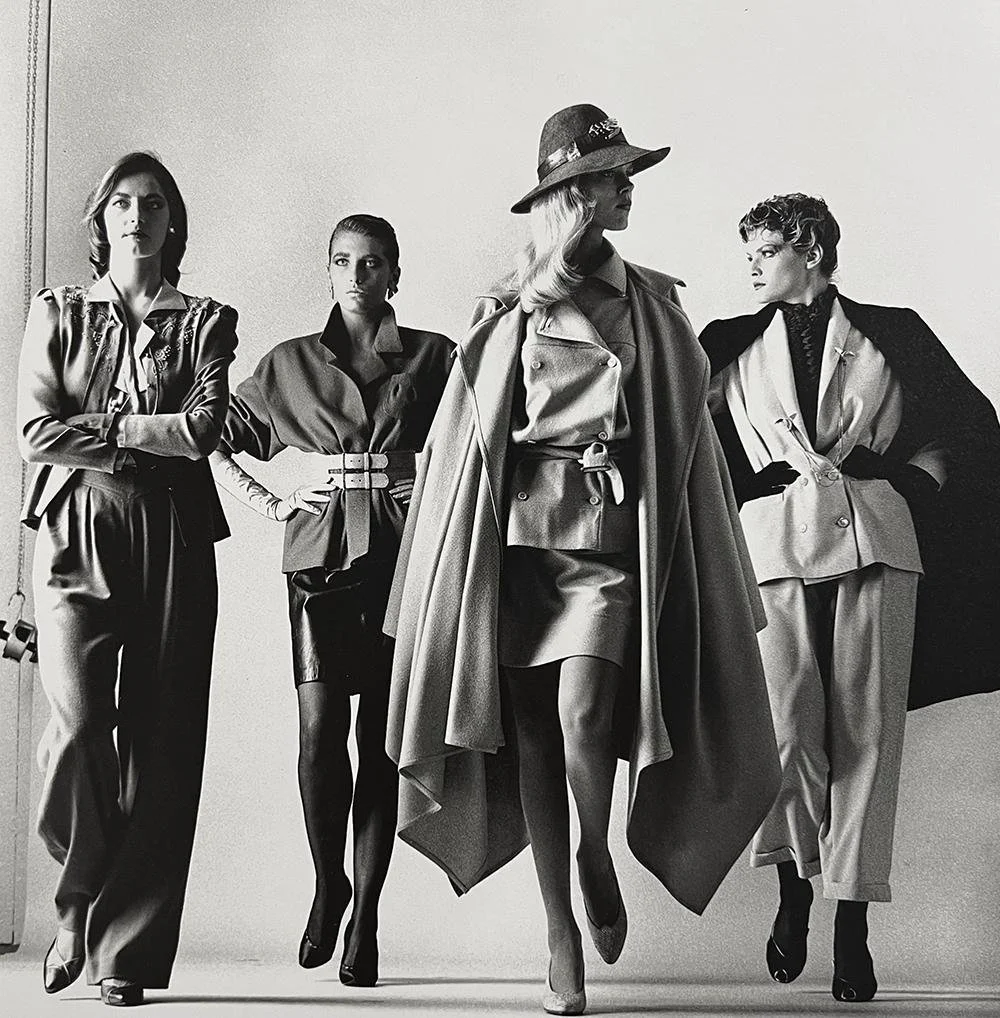
Take Helmut Newton. [IMAGE] His work is immediately, unmistakably his — the power dynamics, the cold clinical light, the way his women occupy space like they own it. Look at "Sie Kommen" — "They're Coming" — the 1981 French Vogue image of tall women in heels striding directly at the camera. Or the "Naked and Dressed" series, where the same models are photographed twice: once in haute couture, once nude, side by side. The juxtaposition is the entire argument. You do not look at a Helmut Newton photograph and wonder who shot it.
Now take Guy Bourdin. [IMAGE] Where Newton is cold and architectural, Bourdin is surrealist and unsettling — saturated color, models posed as if mid-narrative or dead, scenarios that hint at violence or desire without ever explaining themselves. His decade-long run of Charles Jourdan shoe campaigns in the 1970s is collectively one of the most iconic bodies of work in fashion photography history. The most cited single image: a 1975 Jourdan ad showing a pair of pink shoes abandoned on a sidewalk next to a chalk body outline and what looks like blood. He is selling shoes. Readers treated each new campaign like the next installment of a story they were desperate to follow. That is what a fully developed visual identity does — it creates anticipation.

Then take Ellen von Unwerth. [IMAGE] She was a model herself for ten years before she picked up a camera, and that crossover is the whole story of her work — she shoots women the way women want to be seen, not the way men have traditionally decided to look at them. Playful, liberated, in on the joke. Her 1989 Guess campaign featuring a then-unknown Claudia Schiffer launched both their careers simultaneously. Her 2009 shoot with Rihanna for Rated R — Rihanna wrapped in barbed wire and a corset in an old Berlin industrial space — is one of the most striking images of that era. Von Unwerth describes her method as "reportage edge": she is trying to catch a stolen moment, not stage a pose. You can feel it in every frame.
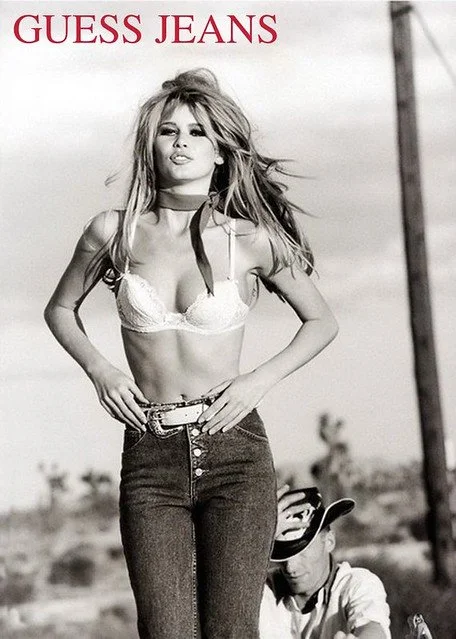

Three photographers. Three completely different visual worlds. Newton's cold power. Bourdin's surrealist unease. Von Unwerth's joyful, liberated sensuality. All three are instantly recognizable without a name attached. That is the standard. Do you know their work? Do you have opinions about it? Can you articulate what each of them was doing, why it mattered, and which one resonates with what you are trying to build in yourself?
If the answer is no — that is where you start.
And unfortunately – and I'm gonna be very frank here –the way that most younger models these days approach preparing for shoots or organizing the visuals that they like is by doing the Pinterest pinning thing, or cobbling together a “mood board,”or other fairly superficial things. But the point of entering into visual study isn't to find a bunch of pictures you want to directly duplicate or just copy stylistically. This isn't just mindlessly developing what is called in Korean “레퍼런스“and just deciding to copy the picture. The point of benchmarking true “inspo” is that it should inspire. A picture or an item or an entire visual style should instill in you a desire to absorb, interpret, and then express in your own way something in the same general range as the thing that you're looking at. It should not only inspire, but cause you to aspire — to be better, higher…more. The point of going into your own program of visual study – basically just looking at pictures — appreciating until you absorb a new way of looking at things — is to develop a clear sense of visual taste, a set of visual, aesthetic sensibilities. THAT is what you need to have well-developed as you think about your visual brand.
If you can't answer these questions, you're not a model yet. You're someone who wants to be a model. Those are different things, and the industry can tell the difference in about thirty seconds.
Modeling is a visual field. The working professionals in it — the bookers, the casting directors, the photographers, the creative directors — have spent years immersed in visual culture. They have references. They have opinions. They can place your look in a lineage, identify which era of which publication your aesthetic is in conversation with, tell you who shot a similar vibe for which brand in which season. When you walk into a room and demonstrate that you live in this world too — that you have absorbed it, studied it, formed actual views about it — you stop being a candidate and start being a collaborator.
And your visual brand — the specific, legible aesthetic proposition that tells a booker what to do with you — that brand needs to be readable not when someone is squinting at your comp card in a well-lit office. It needs to be readable from across the room. From across the street. It needs to be the kind of clarity that hits before anyone has spoken a word, before the portfolio comes out, before the test shots are taken. The model who has done the work on herself — on her actual self, her genuine aesthetic identity — walks into rooms differently. She occupies space differently. She makes a specific claim just by existing in the frame, and that claim is legible.
That legibility is not magic. It's the result of knowing who you are visually, knowing the field you're operating in, and having done the disciplined work of aligning those two things into something consistent and clear.
And knowing the field means more than having a favorite photographer. Do you understand how different types of lighting work? Do you know the difference between strobe and natural ambient light — what each does to skin, to shadow, to the feeling of an image — and what the advantages of each are for different kinds of shoots? Do you have a working understanding of makeup principles — not just what looks good in the mirror, but what reads on camera, which are different things, sometimes radically different? Do you understand why certain contouring techniques that look stunning in person flatten out under a flash, or why a bare face that seems too plain in real life can become extraordinary through a lens?
Or do you have a layperson's understanding of photography, lighting, fashion, and makeup — someone who consumes the field but doesn't actually inhabit it? Because if you're trying to be one of the professional creators in this industry while operating with a layperson's knowledge of how it actually works, that is a fundamental problem. You can feel the gap. So can the people in the room with you.
Here is a useful exercise, and it comes directly from one of the most important ideas in photography. Garry Winogrand — one of the great American street photographers of the 20th century — gave us the general principle plainly: "Photography is not about the thing photographed. It is about how that thing looks photographed." And in the introduction to his 1975 monograph Women Are Beautiful, he made that principle specific in a way that lands directly on what every model needs to understand: "Whenever I've seen an attractive woman, I've done my best to photograph her. I don't know if all the women in the photographs are beautiful, but I do know that the women are beautiful in the photographs."
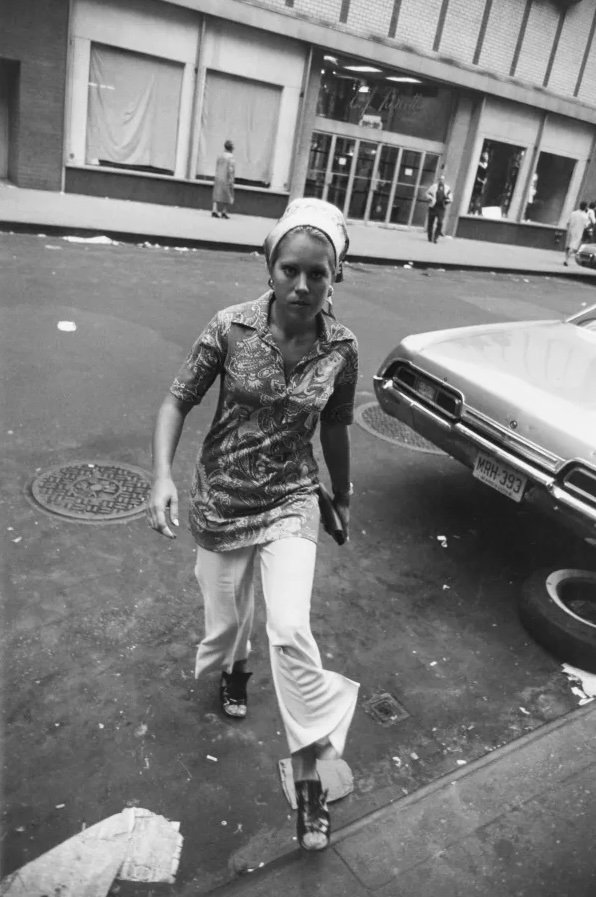
From Garry Winogrand’s Women Are Beautiful, 1975.
That distinction is everything. How you look in the mirror and how you look in a photograph are not the same thing. The camera does not see what you see. It flattens, it frames, it transforms — it creates something that did not exist before the shutter closed. A woman who is stunning in person can disappear on camera. A woman who is mundane in person can become magnetic in a photograph. Winogrand knew this. It's why he kept shooting.
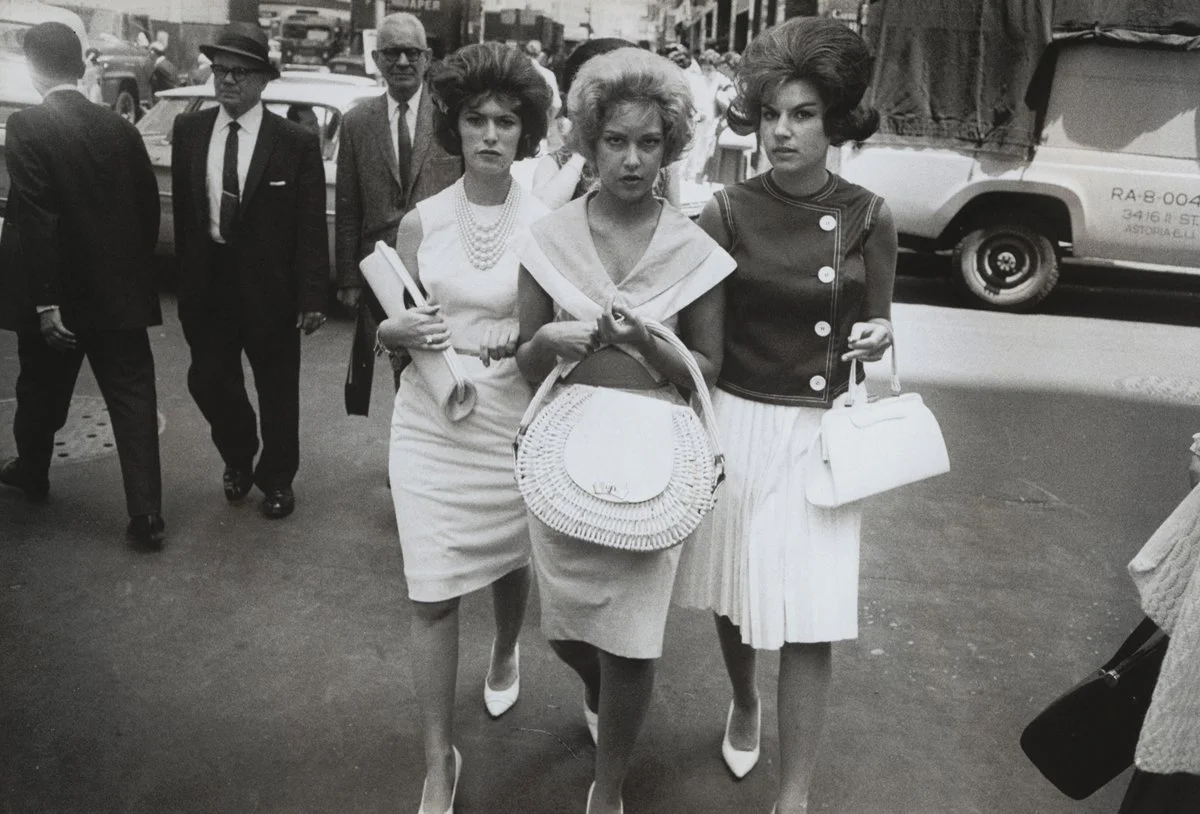
From Garry Winogrand’s Women Are Beautiful, 1975.
Models need to internalize this. You are not modeling in the mirror. You are modeling on a page, on a screen, in an ad, in a catalog. The relevant question is never "do I look good right now?" It is always: "what does this look like photographed?"
This is also, incidentally, what photographers are working toward when they develop their own 개성 (gaeseong). My own goal as a photographer is this: if you take a hundred pictures and scatter them on the floor — work from a hundred different photographers — and one of mine is in the pile, you should be able to pick it out immediately. Not because it has a watermark. Because it looks like mine. That specificity, that instant recognizability, is what I am working toward as a visual practitioner. It is the same thing I am asking models to develop in themselves. The photographer and the model are solving the same problem from opposite sides of the lens.
So here is the exercise: print your best pictures. Not just save them on your phone — print them, physically, and lay them out the way a magazine editor lays out a spread. Look at them in that context. Then try to mock one up. Drop it into a catalog layout. Put it on a Vogue cover template. See what happens. Does it fit? Does the image have the visual weight, the scale, the specific quality of presence that the layout requires? If you are a Vogue cover model, you should be able to take a photograph of yourself and turn it into a Vogue cover without a huge amount of effort. If that exercise reveals a gap — if your image keeps fighting the layout rather than filling it — that is information. That is your market research on yourself.
So. Do you have a favorite fashion photographer? Do you know why? Is your visual brand — the look, the energy, the specific thing a client would book you for today — readable from across the street?
If the answer to any of those is no, that's not a talent problem. That's a homework problem. Do the homework.
A Special Message to the Foreign Model Pool in Seoul
Now let's get specific, because there's a particular version of this problem that plays out in Seoul every single day, and it needs to be said plainly.
Walk into any agency in Seoul that handles foreign models. Look around the waiting room. What do you see?
You see, overwhelmingly, Caucasian women in their twenties. Objectively pretty. Around 170 cm — hovering at or just under the height threshold that would actually get them booked in their home markets. No modeling portfolio from before they arrived in Korea, because they weren't working models before they arrived in Korea. Limited or no Korean language ability. No particular industry network. Nothing that distinguishes them from the thirty other women in the same waiting room who look more or less exactly like them.
This is the foreign model market in Seoul. And if you're in it, you need to understand the math.
The reason many of these women are modeling in Korea in the first place — and this is not a criticism, it's just a structural reality — is that Korea has historically valued a certain Western look as a marker of cosmopolitan aspiration, particularly in advertising and commercial work. Korean brands wanting to signal internationalism, modernity, or a certain aspirational lifestyle have reached for the foreign face as a visual shorthand. That's the market you walked into. And for a time, simply being foreign and kiiiinda pretty was enough to get work.
That market is tightening. Korean brands have more options now. Korean consumers are more sophisticated now. And the foreign model pool in Seoul keeps growing — it expanded dramatically in the wake of the global Hallyu explosion, as Korea's rising profile as a cultural and commercial destination drew more and more foreigners into Seoul's orbit, with many of them developing modeling aspirations.
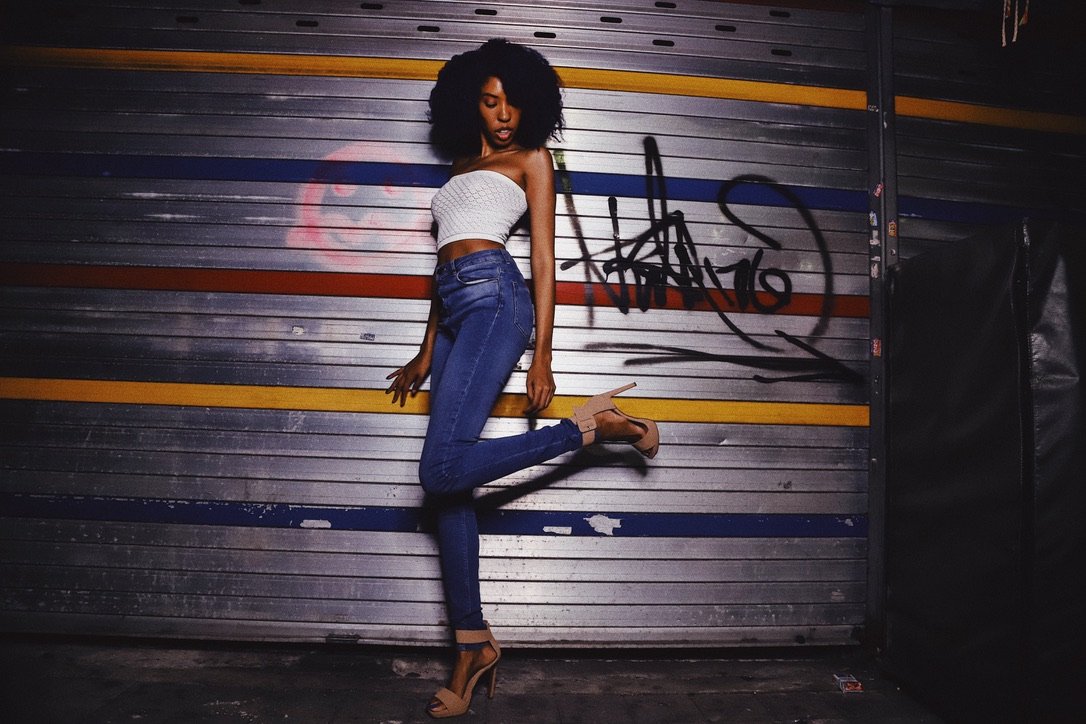
Model @keenapilar in 2019, when Black models were less legible to the Korean market than caucasian models who generically signaled “global.” In 2018-19, even a Black model who looked and stood like a model at 179cm often found very few slots of legibility outside of high fashion runway shows — and not a lot of editorial/catalog work. The market was just in the middle of breaking towards more Black models then, and even the few slots for a Black model to fit into were for very, very specific things. But there wasn’t a LOT.
And the market can shift in ways that are worth understanding — because the same logic that creates the homogeneity problem can, under the right conditions, work in the opposite direction.
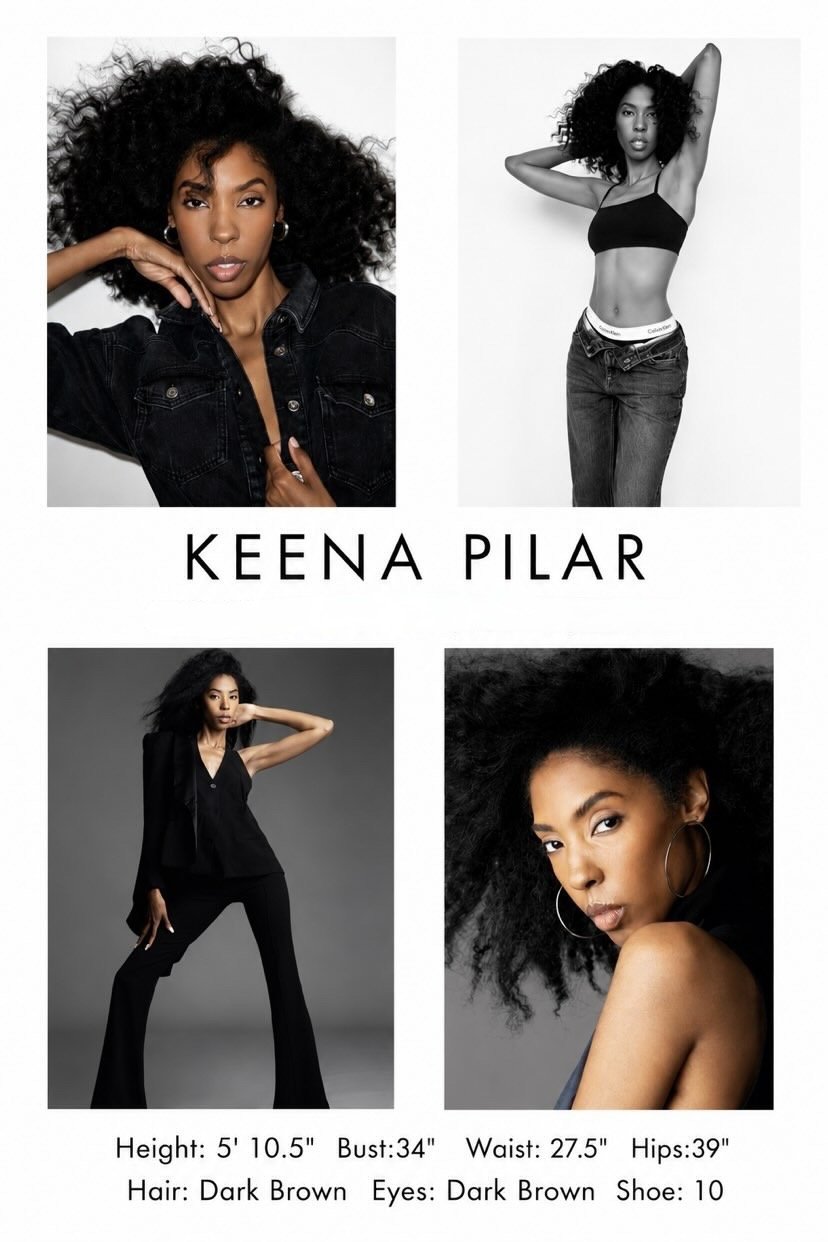
In 2020, Keena moved back to the USA after having had some trouble getting agency placements in Korea even after having amassed aple skill and experience freelancing in the Korean market. Almost immediately upon returning to the USA, she was signed into Wilhemina Models in 2021. But, unfortunately, the Korean market had little room for her while she was here.
Take what happened with Black models in Korea. For the entire history of foreign modeling in this market — decades of commercial work, advertising campaigns, catalog shoots, brand imagery — Black models were, bluntly, not in demand. This was not a secret. It was structural, it reflected longstanding aesthetic preferences in the Korean market, and it was a reality that Black models working in Asia simply had to navigate. And then, relatively quickly, things changed.
When the global zeitgeist shifted — when diversity became not just accepted but actively valued as a marker of sophistication, of global sensibility, of brand modernity — something interesting happened in the Korean advertising market. The bell curve moved. Models who had previously sat outside the range of what Korean clients were looking for suddenly found themselves inside it, and in some cases specifically sought after precisely because of what made them different. Samsung Galaxy campaigns are a good example: as Samsung and other major Korean multinationals pushed harder to project a multicultural, global identity to international markets, a certain kind of visual diversity in their campaigns stopped being a risk and became a requirement. And suddenly there were bookings that hadn't existed before.
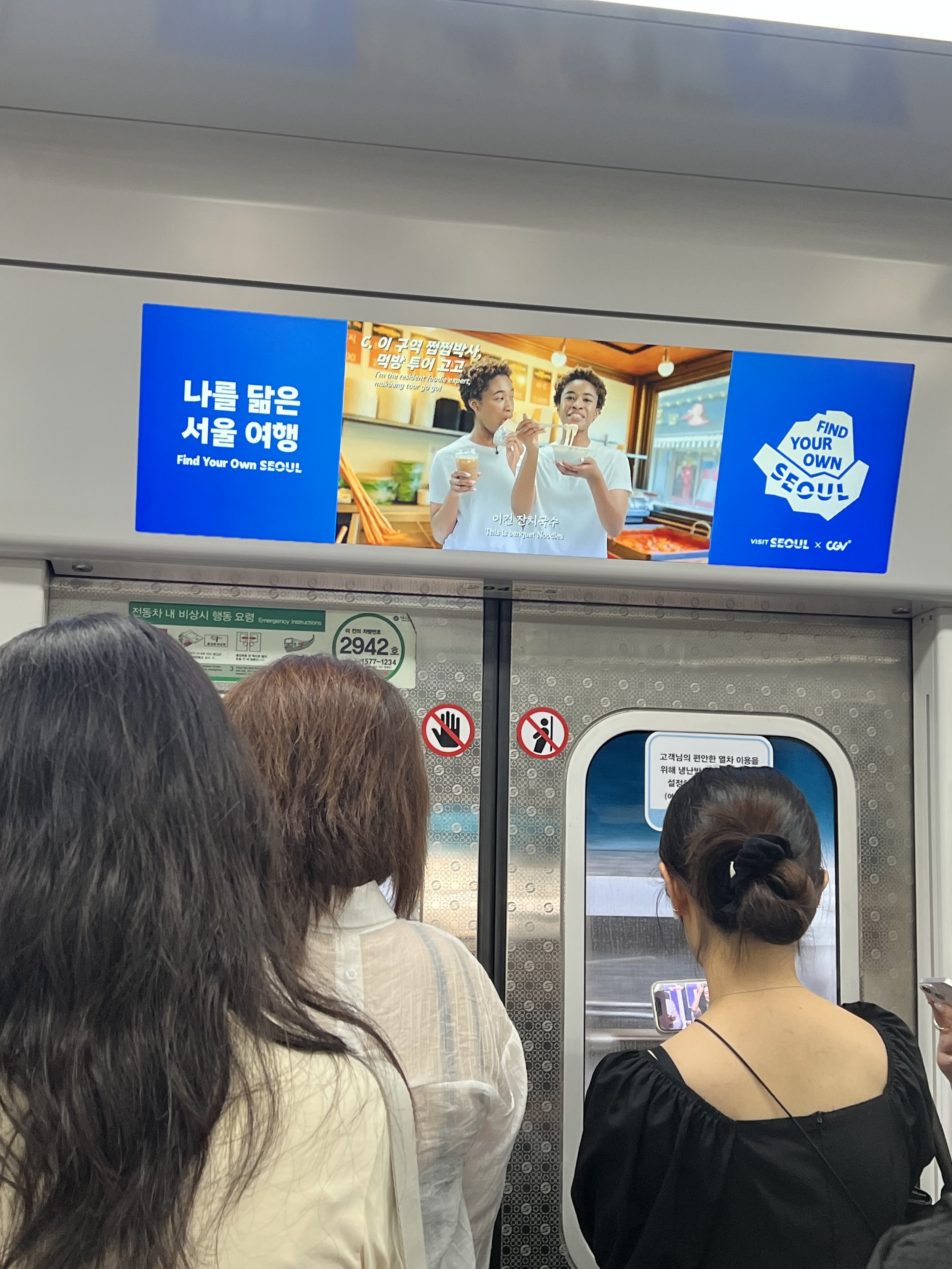
Ive known @reneedreamsart for YEARS now, and was here when she was first starting out circa 2019. She’s been working hard and working her way up, working her own look and visual brand, and then one day last year, I saw her in a Seoul city tourism campaign. I often bump into my former models on billboards and screens around Seoul, so I wasn’t SURPRISED surprised. I was surprised and delighted, though.
The lesson here is not that Black models needed to adjust, adapt, or position themselves differently. They didn't change. What changed was the market — and when the market shifted, it suddenly made many more of them legible in contexts where they previously weren't. The demand was always potential. The models were always there. What was missing was a market structure that could read them.
This is the clearest possible illustration of what legibility actually means. It is not purely a property of the model. It is a relationship between what the model brings and what the market is currently able to see. When Samsung and other global Korean brands began projecting multicultural identity, they created a new set of visual needs — and the models who fit those needs became suddenly, specifically, urgently bookable. Not because they had done anything new. Because the market had finally developed the eyes to see them.
The rest of the argument in this piece — about building a clear visual brand, about developing legible 개성 (gaeseong), about knowing what you are so a booker can know what to do with you — that applies in a stable market where the terms are already set. But the Black model moment in Korea is a reminder that markets move, and when they do, the people who were always themselves — clearly, specifically, without compromise — do get called.
So here's the actual question: if you're in that room with thirty women who share your approximate height, your approximate coloring, your approximate level of conventional attractiveness — what is it, specifically, that makes you the answer to a client's question rather than them?
Be honest with yourself here. Be clinical with it.
Do you speak Korean fluently? Not "I'm studying Korean" — fluently, conversationally, in a way that makes you genuinely useful on a set where the client speaks only Korean. If yes: that is a real differentiator. A foreign model who can take direction in Korean, understand client notes in real time, joke with the crew — that model is valuable in ways that go beyond her face.
Are you actually, by global industry standards, stunning? Not "pretty enough for Seoul" — stunning in the way that would stop traffic and get you signed in New York or London or Paris? Because if the answer is yes, what are you doing in the foreign model pool in Seoul? And if the answer is no — if Korea is where you feel beautiful, where the aesthetic calibration finally tips in your favor — then you need to understand that Korea is not changing the underlying reality of your market position. It's just offering a more favorable local context.
Did you model professionally before you came to Korea? Do you have a portfolio with real editorial work in it, real campaigns, real tearsheets? If yes: show that. It signals something foreign models without it can't signal — that you were bookable somewhere else, on the merits, before you arrived here.
If the answers to most of these are no — and for the vast majority of foreign models working in Seoul, they are — that is not a death sentence. You can still build a career here. But you cannot build it on the same things everyone else in that room is relying on. You have to find your differentiator and go hard at it.
Maybe it's genuine style — not just being pretty but having a real, developed, specific aesthetic point of view that reads instantly on camera. Maybe it's energy, a particular quality of presence that makes photographers want to keep shooting. Maybe it's technical facility — understanding light, knowing your angles, moving through looks quickly so you make a shoot run smoothly. Maybe it's a specific type: a look that matches a niche nobody in the current pool covers.
Whatever it is, you need to know what it is. You need to be able to say, clearly: this is what I am, this is what I bring, this is what you do with me. Because the booker is not going to figure that out for you when there are twenty-nine other women in the room waiting for their turn.
The 개성 (gaeseong) imperative is real for every model in every market. But in the Seoul foreign model pool, where the physical and demographic homogeneity is unusually high, the pressure to differentiate is even more acute. The person who wins is not the prettiest person in the room. It's the person who is most specifically and legibly herself.
The Cosplay Problem: When Fantasy Beats Market Reality
Let me make this concrete with a real example.
Not long ago, I worked with a foreign model trying to break into the Korean market through an agency. She wasn't super thin — she had a healthy, natural fullness to her, a cherubic quality that was part of what made her face work. And her face worked. Genuinely pretty, naturalistic, warm. The kind of face that reads as immediately approachable and real.
My read on her was clear: catalog. Girl-next-door. The kind of wholesome, relatable presence that Korean commercial clients pay well for and need constantly. It wasn't a consolation prize — it was a legitimate, bookable lane that fit her actual visual identity precisely. That reading, executed well, could have gotten her consistent work.
She bristled against it. Hard.
What she wanted was to do high fashion. Specifically, a kind of extreme, rarefied elegance — the visual vocabulary of early 20th century Vogue, the aristocratic remove of old-money European fashion photography. Architectural poses. Hauteur. The full fantasy.
Here's the problem: she didn't embody it. Not because she wasn't good enough, but because it simply wasn't what her face and body communicated. Visual legibility isn't about your aspiration. It is not about YOU. It's about what actually registers when the camera reads you, how the the market reads you. And what they were reading was not 1920s Vogue. It was someone trying to perform 1920s Vogue, which is a different thing entirely.
So instead of building the lane that fit her, she kept producing what I can only describe as vanity photography — elaborate, carefully styled shoots with friends, chasing an aesthetic that felt meaningful and elevated to her personally, that made her feel good about the images she was making. And that's fine. Photography as self-expression is legitimate. But it is not a modeling career. It's cosplay with better lighting.
Here's the brutal market reality that she was unwilling to hear: if a Korean client wants a Caucasian model who reads as old-world European haute couture — the 1980s Vogue cover girl energy, the extreme elegance, the thing she was chasing — they are going to call an agency and ask for a 183 cm woman who actually embodies that archetype in her bones. Not someone who is 160 cm and very pretty in a naturalistic way. The clients who need the first thing are not going to book the second thing. Markets don't work on aspiration. They work on fit.
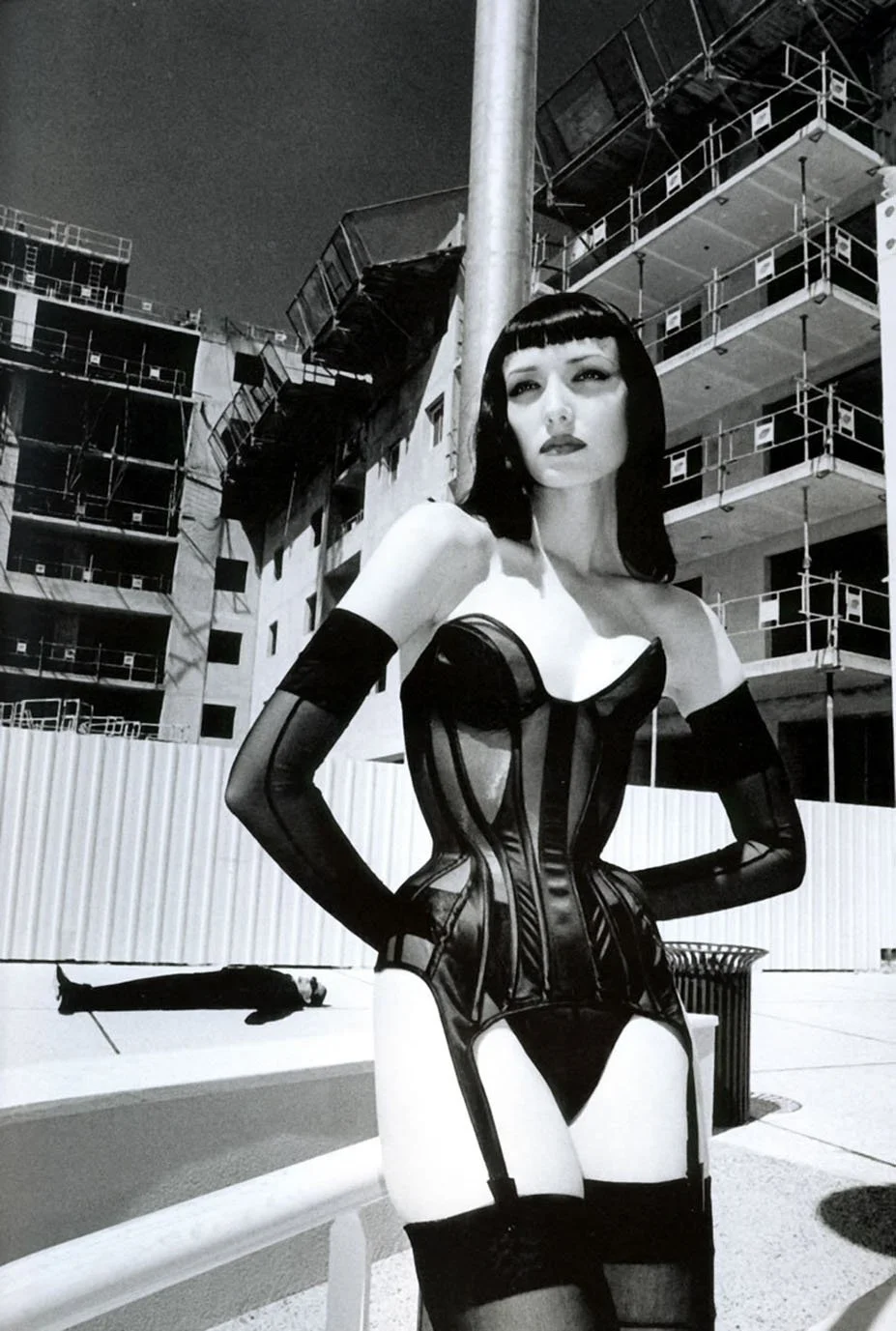
Trust me when I say that if an agency is commissioned to have Helmut Newton shoot a Thierry Mugler piece, they're gonna find the model that best fits that I want guard style, and it's not gonna be the catalogue model – it's gonna be somebody who exists at the extremes of the human form. And you didn't lose anything, since you were never in the running. It's just that certain models are gonna get booked for certain things.
And meanwhile, the catalog market — the work she could actually get, that suited her actual presence, that clients in her genuine lane were actively looking for — went unbid on because she wouldn't claim it.
This is not a story about talent. It's a story about the refusal to read yourself accurately and build from what's actually there. The fantasy of what you wish you looked like on camera will always lose to the reality of what you actually look like on camera. Clients see the reality. Bookers see the reality. The only person in the room not seeing it is the model who has decided her market position is about what she wants to project rather than what she actually projects.
Think about James Gandolfini. The man who played Tony Soprano. He looked the way he looked — not like Brad Pitt, not like Keanu Reeves, not like anyone who was ever going to headline an action film or carry a romantic lead. He was never going to be John Wick. But he got constant, serious, well-paid work for decades because he was exactly and completely himself on screen, because that specific presence fit certain roles with a precision nobody else could match, and because the industry knew immediately what to do with him. Keanu Reeves cannot do what Gandolfini did. Gandolfini cannot do what Keanu Reeves does. Neither of them is lesser for it. Both of them built careers out of being exactly what they are.
Now take Timothée Chalamet. He plays wildly different roles — a grieving teenager, a royal heir, a drug addict, Willy Wonka. He is obviously not just being himself in every film. He is acting. But make no mistake: there is a part of the actual Timothée Chalamet in every single one of those performances. Some quality that is genuinely, irreducibly him — a sensitivity, an intensity, something in the way he occupies a frame — that he actively draws from to inhabit the people he plays. That is precisely why we want to keep watching him do different things. We recognize something we respond to even as he disappears into each character. If it were purely him being himself, he would fail at the job. If there were nothing of him in it at all, we would not care.
Robert De Niro has a specific feel that runs through nearly every role he plays in Martin Scorsese's films — a coiled intensity, a volatile interiority — and there is a reason Scorsese keeps casting him across decades. Every major Hollywood actor who commands genuine attention, who people have actual opinions about, has this going on. A consistent, legible something that is theirs and theirs alone, that runs through every character they play, that makes the audience feel they are watching a real person and not just a performance.
The best models have this too. The ones who build real careers, who get called rather than cast, who develop long relationships with specific photographers and creative directors — they have a version of this running through every shoot, every concept, every client. You can put them in ten different looks and something constant comes through. That constant is their 개성 (gaeseong). The looks are the roles. The 개성 (gaeseong) is what makes you worth watching in all of them.
The model who smiles cleanly at the camera holding up a new sandwich or an energy drink — she is a working model. She got paid. Her face moved product. That is the job. It is not beneath anyone. The question is simply whether you want to do the job or whether you want to take pictures that make you feel like a different, more elevated version of yourself. Both are legitimate activities. Only one of them is a career.
개성 (gaeseong) only becomes a career asset when it's accurately perceived and strategically deployed. When it becomes the vehicle for self-expression that ignores the market entirely, it's just a very expensive hobby.
Know what you are. Build from there. The lane that fits you is not beneath you — it's the only lane where you can actually drive.
What Korean Modeling Gets Right (And Where It Fails Too)
Korean modeling culture has a specific relationship to 개성 (gaeseong) that's worth examining.
On one hand, the K-pop training system produces performers with ferocious control over their visual presentation. Trainees learn, over years, how to deliver consistent, high-quality visual performance. They understand lighting, angles, the difference between their stage persona and their off-stage self, how to move between them.
On the other hand, the same training system that produces control can produce a kind of 개성 (gaeseong) erasure — models who are technically excellent but visually interchangeable, who have been so thoroughly trained to hit marks that the actual individual underneath has been smoothed away. Korean beauty standards, when applied uniformly, can produce a homogeneity that reads as polish from one angle and anonymity from another.
The models who break through — in Korea and globally — are the ones who keep something wild. Who have a specific, irreducible quality that training sharpened but didn't erase. The trainee system gives you the instrument. 개성 (gaeseong) is the music you play on it.
And clients know this. Brand campaigns that need a face that means something — not just a face that looks good — are looking for the same thing Francis Arden was looking for, the same thing Jym Benzing is watching for in his casting sessions. The camera is a lie detector for authentic presence. It always has been.
I Watched This Happen In Real Time
I was an invited photographer on 킬잇: 스타일 크리에이터 대전 — Kill It: Style Creator War — the tvN elimination competition produced by CJ ENM. Style competition. Real photographers. Real stakes.
Here is what I observed.
Every single contestant on that show was stylish. That was not in question. These were not amateurs who wandered in off the street — they were people who had already invested seriously in their look, their aesthetic, their presentation. In terms of baseline style credentials, the field was genuinely level. Nobody was eliminated for being unstylish, because nobody was unstylish.
What decided it was something else entirely.
The format of the first round put contestants on a raised stage, in groups of five, simultaneously, where they had to compete for photographers' attention through posing and presence. Points were calculated based on how many shots each photographer took of each contestant. Not subjective scores. Not panel opinions. Actual shutter counts. The photographers voted with their cameras, and they voted based on one thing: who they could not stop shooting.
And here is what made it interesting, and what made it feel very familiar: many of the contestants who dominated that round had already attracted the attention of the photographers before they ever got onto the stage. As they were coming down the stairs. Moving through the space. Before the competition officially began. The ones who had it — the legible, immediate, inexorable visual presence — were already being watched before they hit their mark.
That is not magic. That is 개성 (gaeseong) functioning at full capacity.
Now think about what you are actually doing when you walk into an agency for an interview. Or when you send a DM and the booker opens your Instagram profile for the first time. You are on that stage. You are coming down those stairs. The photographer — the booker, the client, the casting director — is already deciding whether to raise the camera before you have said a single word. Your first impression is not the handshake. It is the walk across the room. It is the first nine images they see when they tap your profile. Before you have spoken, before they have read your bio, before any conversation has happened — they already know whether they are interested. That judgment is made on 개성 (gaeseong) alone. Make sure yours is readable.
The difference between the modeling agency and the competition show is this: the show only has room for one winner. The agency needs a range of looks, feels, personalities, and visual brands — because clients need different things and no single model covers all of it. There is more room in a real agency roster than there is on a competition stage.
But the elimination logic is the same. If your 개성 (gaeseong) is not legible before you open your mouth, you are already behind the person who walked in after you.
The Work Nobody Tells You To Do
So what does this mean practically?
Study yourself on camera — not selfies, actual photographs taken by someone else with real equipment. Learn what you look like when you're not looking at yourself. They are different people.
Build a visual language for yourself — not from Pinterest boards and trend reports, but from your own history, your own references, your own genuine aesthetic obsessions. What do you wear when nobody is watching? What spaces make you feel like yourself? What music, what films, what images have always gotten to you? This is data. It tells you who you actually are aesthetically, which is the raw material for a visual brand.
Study pictures. Study photographers and their bodies of work. STUDY fashion. STUDY modeling. Take it seriously.
Practice accessing an occupying genuine states rather than performing them. An actor doesn't "act sad" — they remember something sad. When a photographer says "give me something dark," the model who goes somewhere real will register differently than the model who scrunches her brow and tries to look moody.
Curate your Instagram as if it is your portfolio — because for most bookers, it is. The first nine images a casting director sees when they tap your profile are your first impression, your comp card, and your argument all at once. They should not be a random assortment of your best moments. They should tell a coherent visual story about who you are and what you bring. One image should make someone want to see the next. The grid as a whole should communicate your lane instantly. If a booker looks at your profile and cannot immediately identify what kind of work to send you for, that is a curation problem, not a beauty problem. Fix it.
And — the part that most directly applies to the question of legibility — develop your personal aesthetic to the point of specificity. Not trendy. Not versatile in a generic way. Specific. Specific enough that a booker can look at your card and say: "Ah. This one is for the campaign about X. This one goes to the shoot that needs Y."
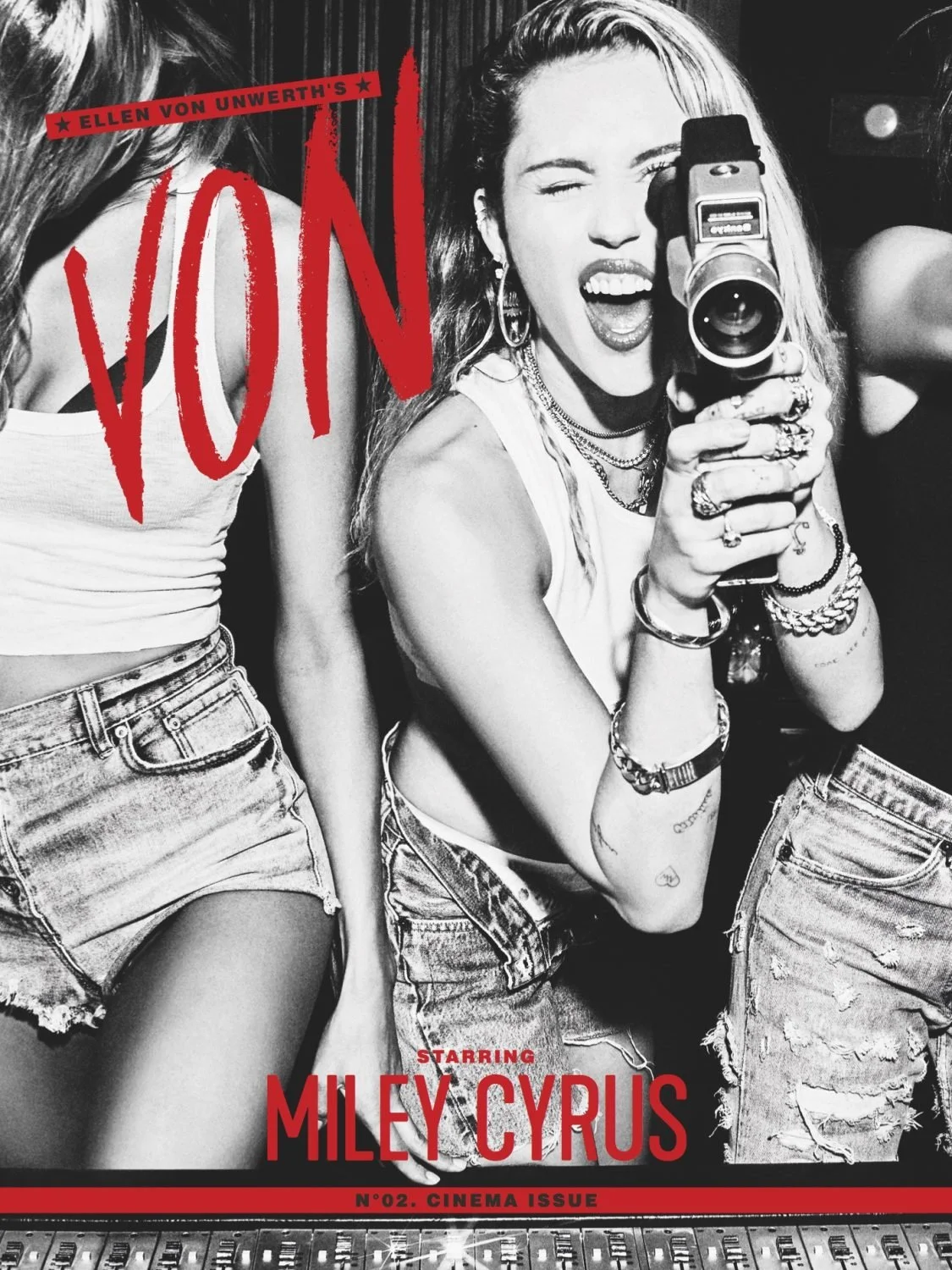
Ellen von Unwerth shooting Miley Cyrus — who is not technically a “model” — is likely easy, because Miley Cyrus has a very clear sense of self and has developed her own specific visual brand. It's not to everyone's liking, but it's clear.
The goal is to be useful to the people who book you. And the most useful thing you can offer is clarity.
When a model walked into the casting for the Gangnam shoot and EMA backed her for it, it wasn't just because she was beautiful. Seoul has beautiful. It wasn't just because she had something about her. Seoul has that too. It was because she was specifically, legibly, unmistakably herself — and that self was exactly what the concept required.
That's the work. Build the self. Make it legible. Let them see what to do with you.
One More Thing
I want to say something directly to the people this article is aimed at.
I really respect you. The young people in their early 20s who are out here doing these extremely risky and adventurous things — showing up in Seoul with a dream and an Instagram account and not much else — you have my genuine admiration.
When I was in Korea in my early 20s, back in 1994 to 1996, I was in a structured US government program. I had scaffolding. I could have a lot of fun and learn things and take risks because I was protected by that structure. I was never just a kid who showed up in a foreign country open-ended, with nothing guaranteed, betting everything on making something happen through sheer will and a good face. I didn't have that kind of nerve at that age. Most people don't.
You do.
And that bravery almost always comes packaged with a certain amount of naivete — not as a flaw, but as the other side of the same coin. You cannot show up at 19 or 22 in a city like Seoul and throw yourself at the modeling industry without a degree of faith in yourself that outstrips what the evidence currently supports. That is not foolishness. That is what bravery is.
I can also say this directly because of where I stand. I come at this industry as an academic, a professor, and a researcher — someone who uses photography to gain access to a space he studies, not to earn a living from it. My bread and butter does not depend on staying in anyone's good graces in this industry. I am not a photographer who needs to keep clients happy or an agent who needs bookings to make rent. I am a researcher who moves through the Korean fashion world with a camera, and that position gives me a freedom to say plainly what I see that most people operating inside the industry do not have. The analysis in this article comes from that vantage point — inside enough to know how it works, independent enough to say so.
This article is direct because the market is direct. It does not wait for you to figure things out on your own schedule. But the directness here comes from respect, not contempt. The people who show up and try — who put themselves in front of cameras and walk into agencies and build something from nothing in a city that did not ask them to come — those people deserve honest information more than they deserve to be handled gently.
You have the bravery. Now get the knowledge to back it up.
SEOULACIOUS covers Korean fashion and culture with the directness it deserves. All UNCUT SEOUL editorial photography by Dr. Michael Hurt / Seoul Street Studios (@seoulstreetstudios). Casting Director — NA-YEON KANG (Joanne), Elite Model Agency Korea.