On the Kill Shot, Photographic Professionalism, and the Korean Weather

@bettercall_betty helps the camera navigate one of Seoul’s most iconic, everyday spaces while playfully expressing herself most Seoulaciously.
There's a difference between a nice photo and a kill shot, and it's not really about the camera. A kill shot is the frame that reads as intentional the second you see it — lighting that's been decided, not just found; a subject who's been directed, not just photographed; a location chosen because it means something, not because it happened to be convenient. It's the difference between a picture and an editorial. Between "nice trip" and “Wow. This IS quintessentially Seoulacious.”
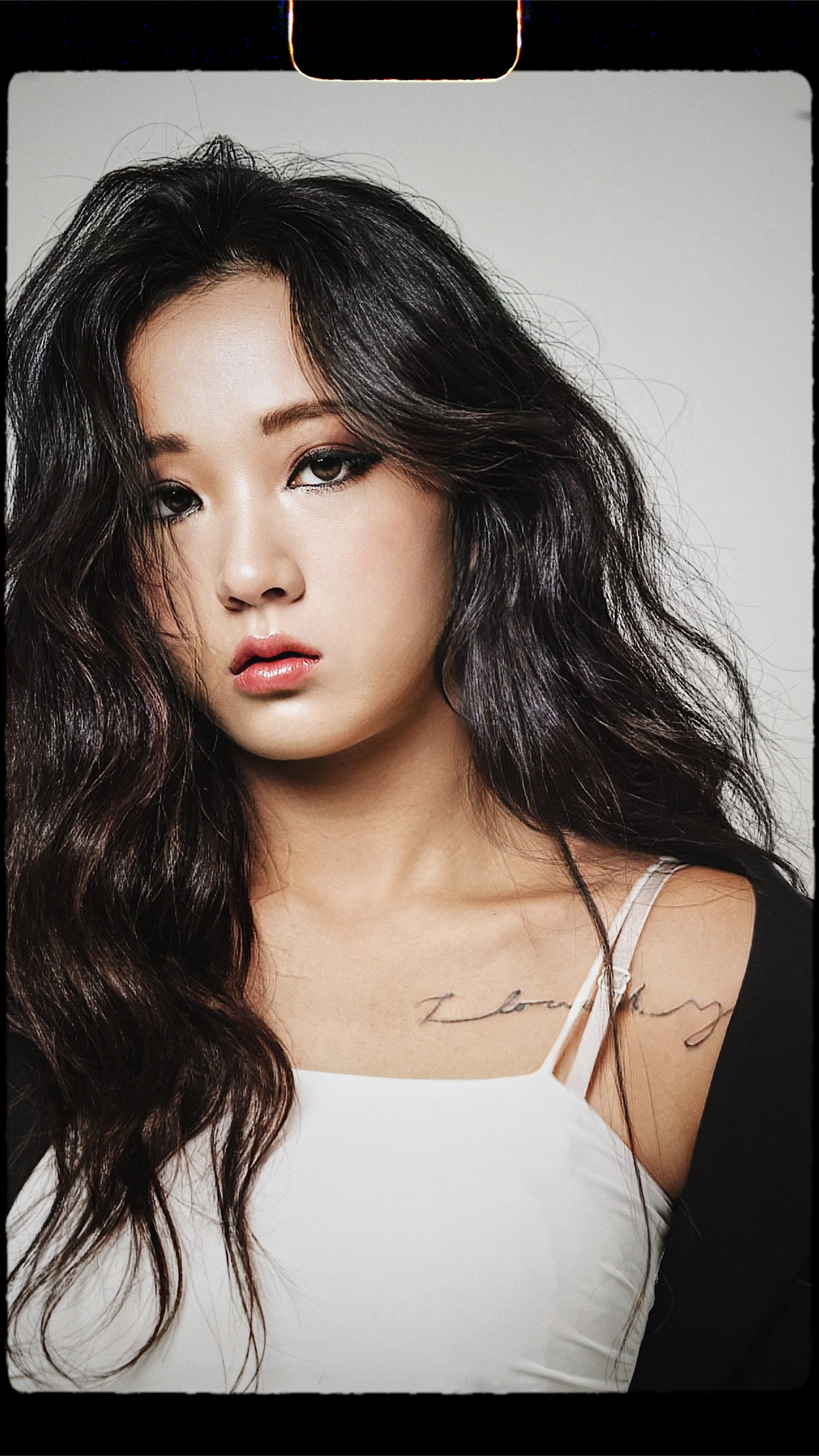
Or maybe, as part of your Seoulacious experience, you want to do a bit of studio. We know how to make any place in Seoul a studio shot; AND we can also hit up a proper studio in the city and give you THAT magazine shot you never knew you had in you. @bettercall_betty was a top K-Pop star on this, her first time shooting still photos in a studio.
Aspiring models run into this exact wall constantly, and it's worth understanding why. Korea has one of the most active amateur modeling scenes anywhere — hundreds of hopefuls trading time for images with hobbyist photographers who mean well and often bring real enthusiasm. What they usually don't have is the thing that actually separates a portfolio snapshot from a kill shot: technical command, directorial confidence, and the editorial eye to know what an actual Vogue-level frame requires before the shutter ever clicks. A model can do fifty of these exchanges with fifty different randos and still not walk away with a single image she can use. More frames isn't the fix. A different level of photographer is.
Travelers run into that same wall — just compressed into a single afternoon instead of fifty separate tries. It usually looks something like this.
It's 11 p.m., the night before the flight home, and she's still scrolling. Not for restaurants. For a photographer. Someone — anyone — who can meet tomorrow, somewhere pretty, and get "the shot." The one that proves the trip happened. The one that's supposed to summarize five days of Seoul in a single frame.
This happens constantly. Not because people don't care about the photo. Because they assume it'll just come together — that any camera, any friendly stranger with decent Instagram taste, any last-minute DM to someone who says they're "into photography," will get them there. It rarely does. And by the time that becomes obvious, there's no time left to fix it.
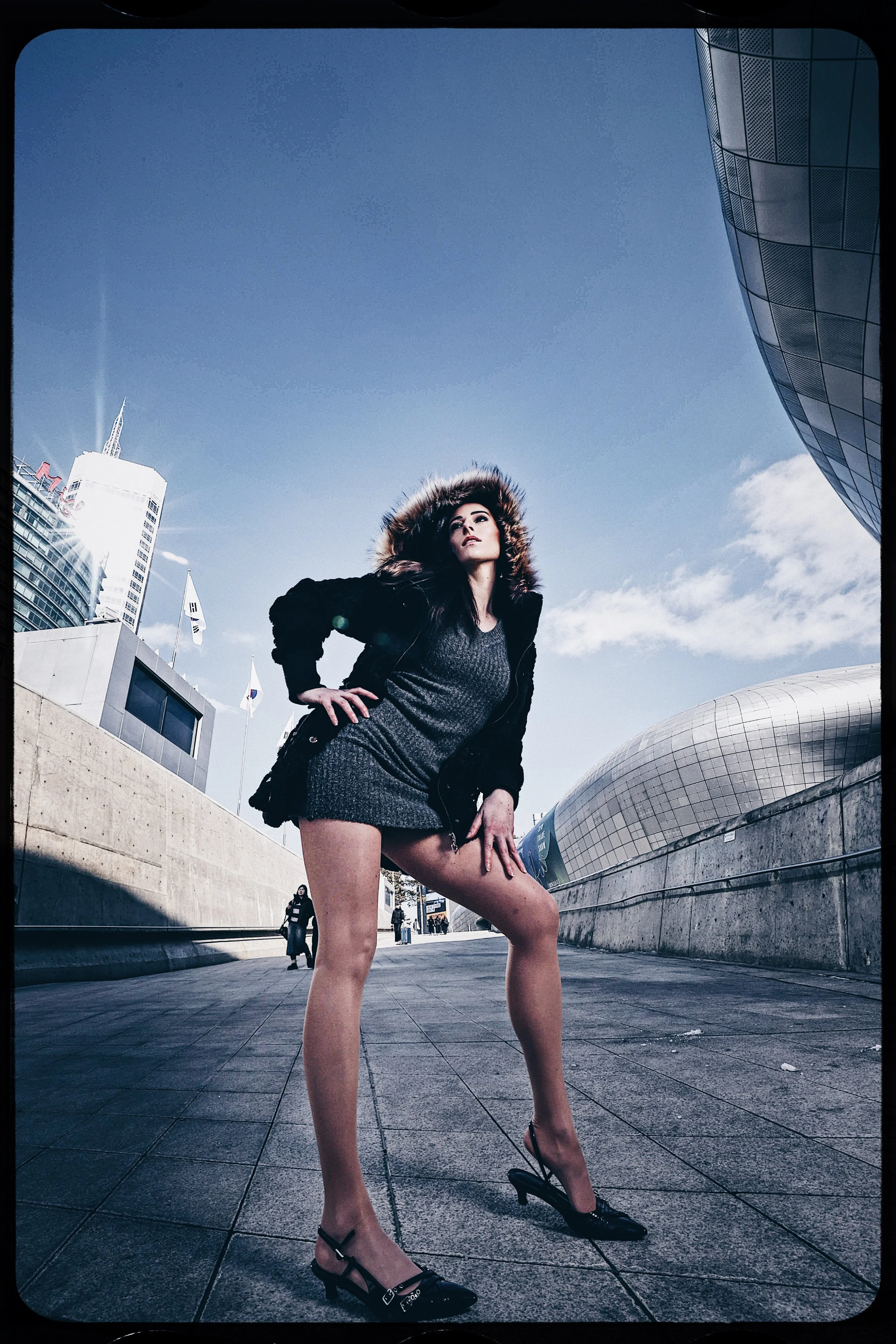
Go with the hobbyist who can occasionally get a Kill Shot, or the pro who does it on command, as the job calls for it. This is the only main difference between a pro shooter and a talented amateur. The former has the gear, skills, and knowledge to get THAT shot on command The amateur might have the same gears nowadays, and shoots enough to get lucky with it sometimes. @roseannblooms knows how to strike just the pose that Seoul Fashion Week requires, as well as what I as a photographer require to help make not only the person, but architect Zaha Hadid’s iconic DDP structure pop.
Here's what actually happens instead: the light's wrong, the location is packed with fifteen other people doing the same pose, the "photographer" cancels because it started drizzling, and the shots that do come back look like everyone else's. Not because the traveler didn't try. Because getting an actual editorial-quality photo in a foreign city isn't a stroke-of-luck problem. It's a logistics problem wearing a creative costume.
The Free Shoot Isn't Actually Free
There's a version of this that seems smarter: skip the professional, find someone willing to shoot for trade — a portfolio swap, a "collab," a favor. It reads as resourceful. Sometimes it even works out fine.
But here's the part nobody accounts for going in: a shooter with nothing riding on the outcome has no reason to push through a bad afternoon. Rain shows up in the forecast, and a paid professional works around it. A TFP arrangement, on the other hand, is just as likely to apologize profusely and cancel — because for them, this was never actually a commitment. It was a maybe. And a traveler with five days in the country doesn't get a second maybe.
This is the trade nobody names out loud: free shoots aren't free of risk. They're just free of accountability.
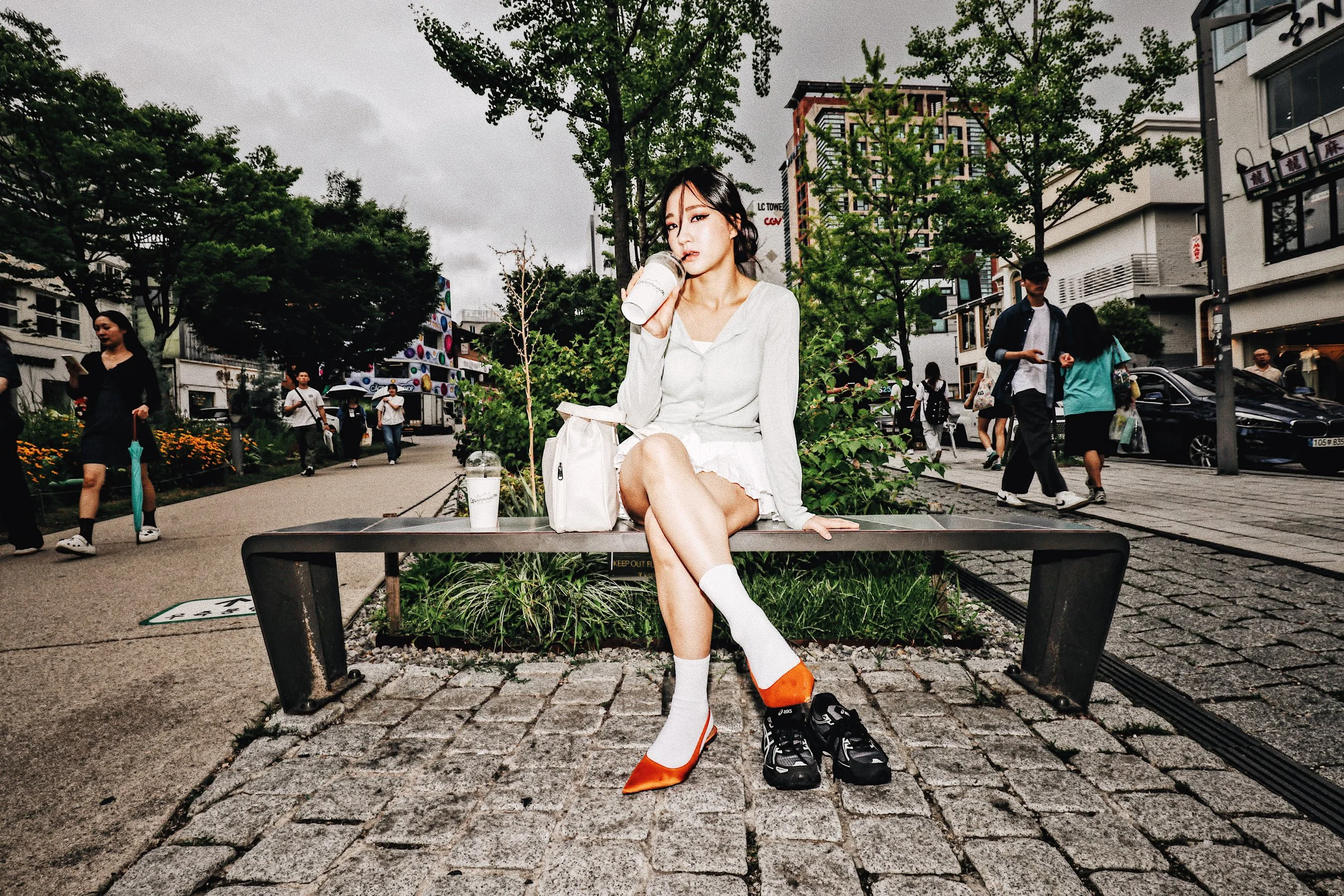
Korean model @bettercall_betty and I know that even when it’s monsoon “raining”, there are often wiiiide breaks between sonagi, so we can gitter done. Between the rains in Yeonnam-dong, near Hongdae, in early July.
Locations Aren't Found. They're Earned.
The bigger issue isn't reliability — it's knowledge. Anyone can point a camera at a pretty street. Getting the right street is a different skill entirely, and it's not one Google Maps teaches.
Seoul's most photogenic neighborhoods didn't become photogenic by accident, and they don't stay that way forever. The spots everyone already knows about are, by definition, the spots that stopped being interesting the moment they became famous. Every "hidden gem" listicle has a shelf life measured in months, and once a corner shows up in fifty other people's grids, it reads less like discovery and more like a template. The neighborhoods that actually deliver something worth keeping are the ones that are just starting to turn — the ones most locals haven't caught onto yet, let alone tourists.
That kind of knowledge doesn't come from a blog post. It comes from decades of fieldwork — scouting, shooting, watching how neighborhoods shift season to season, learning which specific corners hold light the way a stylist wants it to. It's less "finding a location" and more running fieldwork with a camera. This isn't guesswork. It's pattern recognition built over twenty years of actually being here.
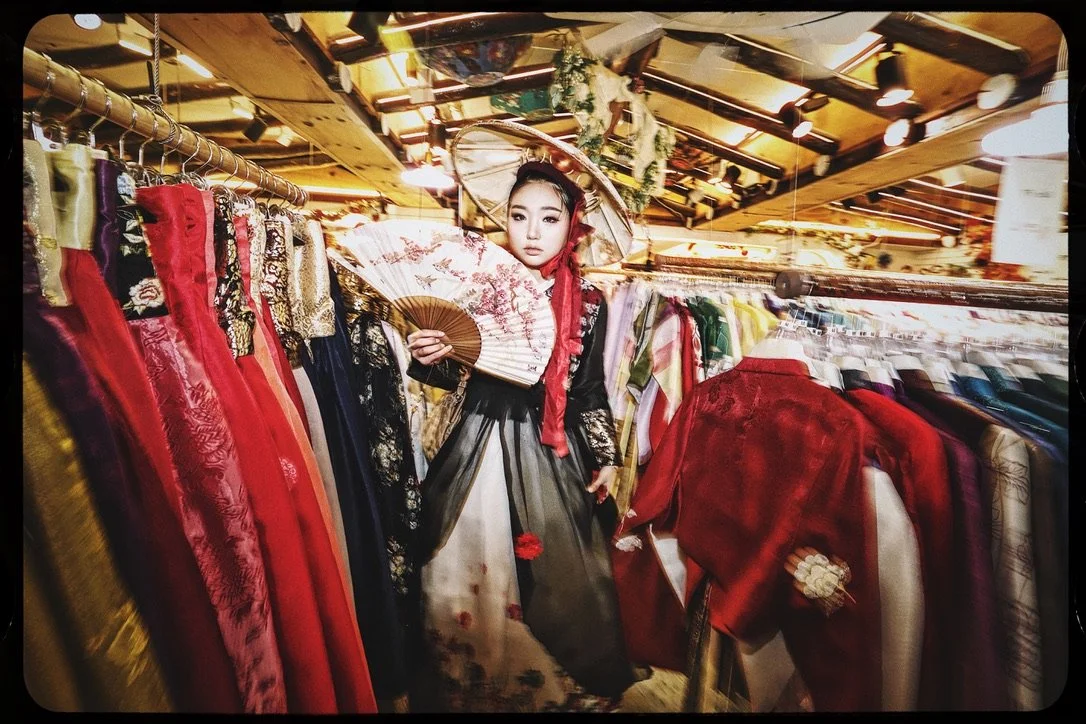
“The Traditional Tourist”, 2025.
Even in the most glibly touristy of tourist spaces, model @sio.show and I found a way to add a bit of zing and commentary on what might have been just another droll, touristy moment.
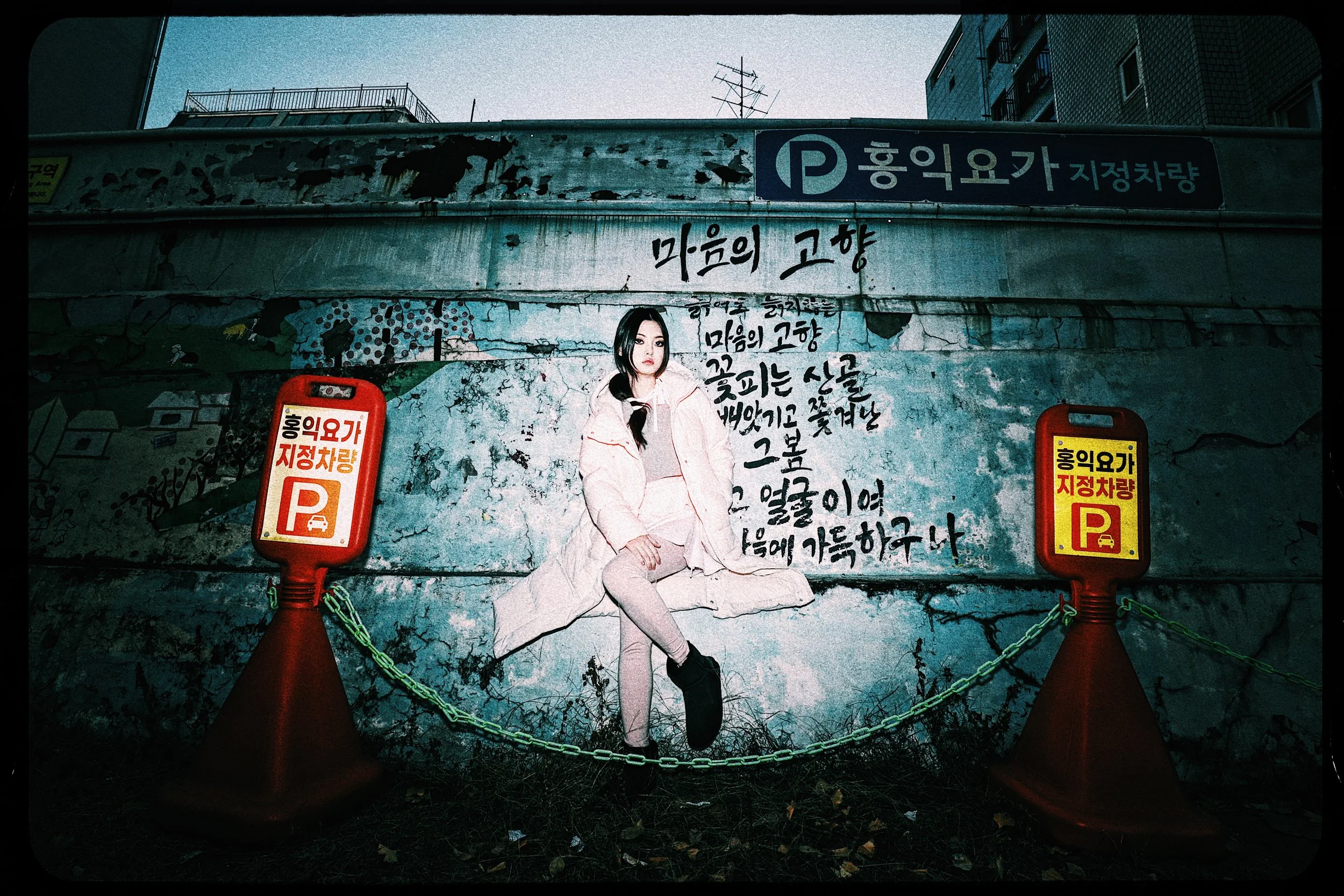
Model @exnxyung showcases a spot between Shinchon and Hongdae that has some of the only hangul “graffiti” in the city, which we made aesthetic use of. Graffitti, with its origins in the stylized scrawlings of 1970s NYC, tends to be also drawn with the style’s distinctive Roman lettering of the originals in America, even in Korea.
Knowing The Climate, Not Just Reading The Forecast
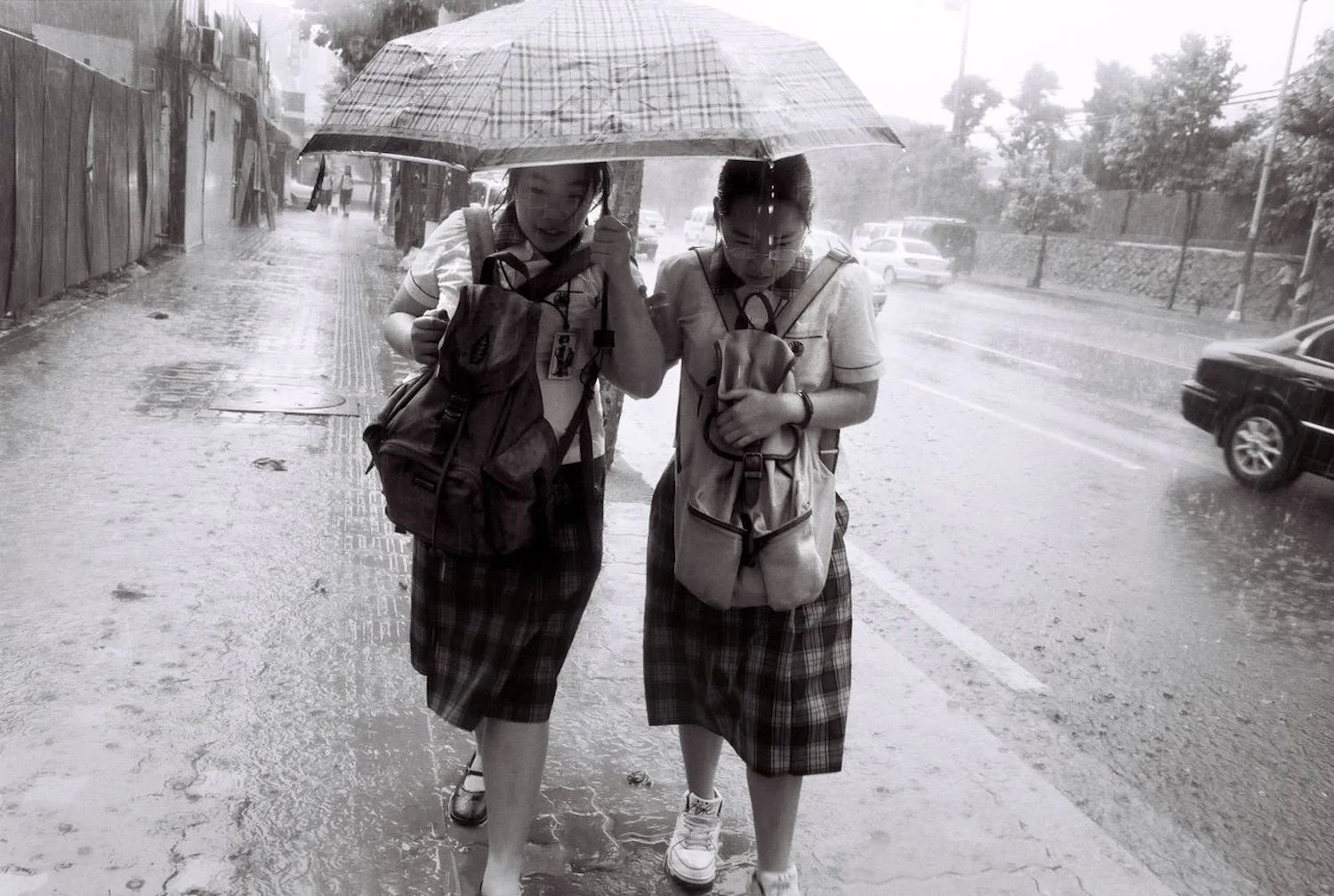
A sonagi, 2002. Sometimes, it just catches you off guard, like it did for me and these kids, running in opposite directions to cover. And even an umbrella might not help much. You just need to find cover.
Then there's the stuff that only shows up once someone's already lived through it a hundred times. Take monsoon season. Most visiting photographers see rain in the forecast and call the whole day off — lost booking, lost window, lost trip.
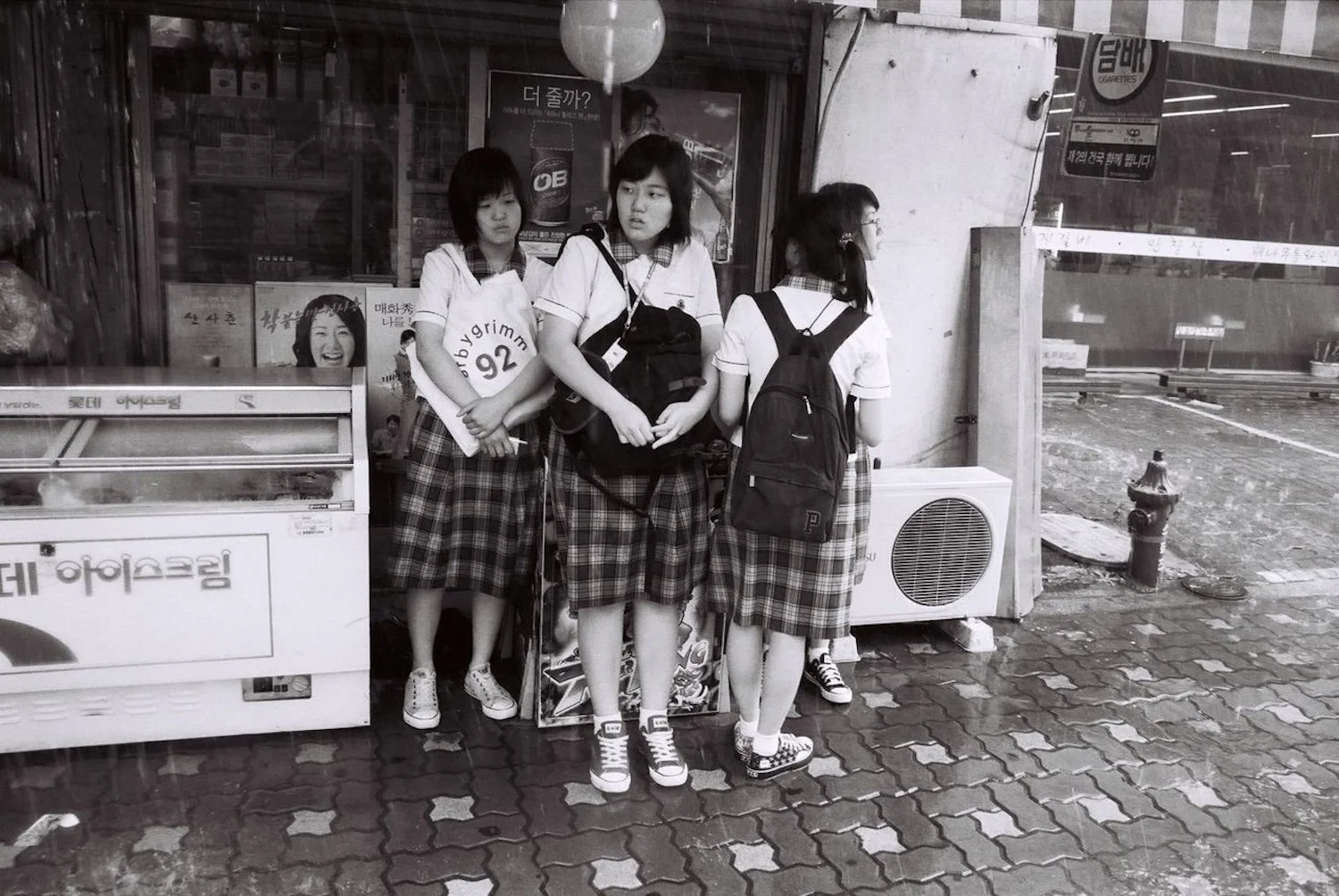
In this sonagi, me and a bunch of kids just hid out for a few minutes, waiting for the monster to punch itself out a bit before we hopped to the next impromptu refuge.
But a 소나기 (sonagi) isn't some obscure microclimate quirk a photographer stumbled onto. It's old, common-sense Korean knowledge — the kind of thing every Korean grows up simply knowing, the same way growing up near the coast teaches you to read a tide table without thinking about it. A sonagi is a micro-squall: sudden, violent, and short. It can come down like the sky just tipped over — and then, seven minutes later, it's gone. Dry for three hours. Another twenty-minute burst. Bone dry again for four more hours. Then, some nights, it rains steady until morning.
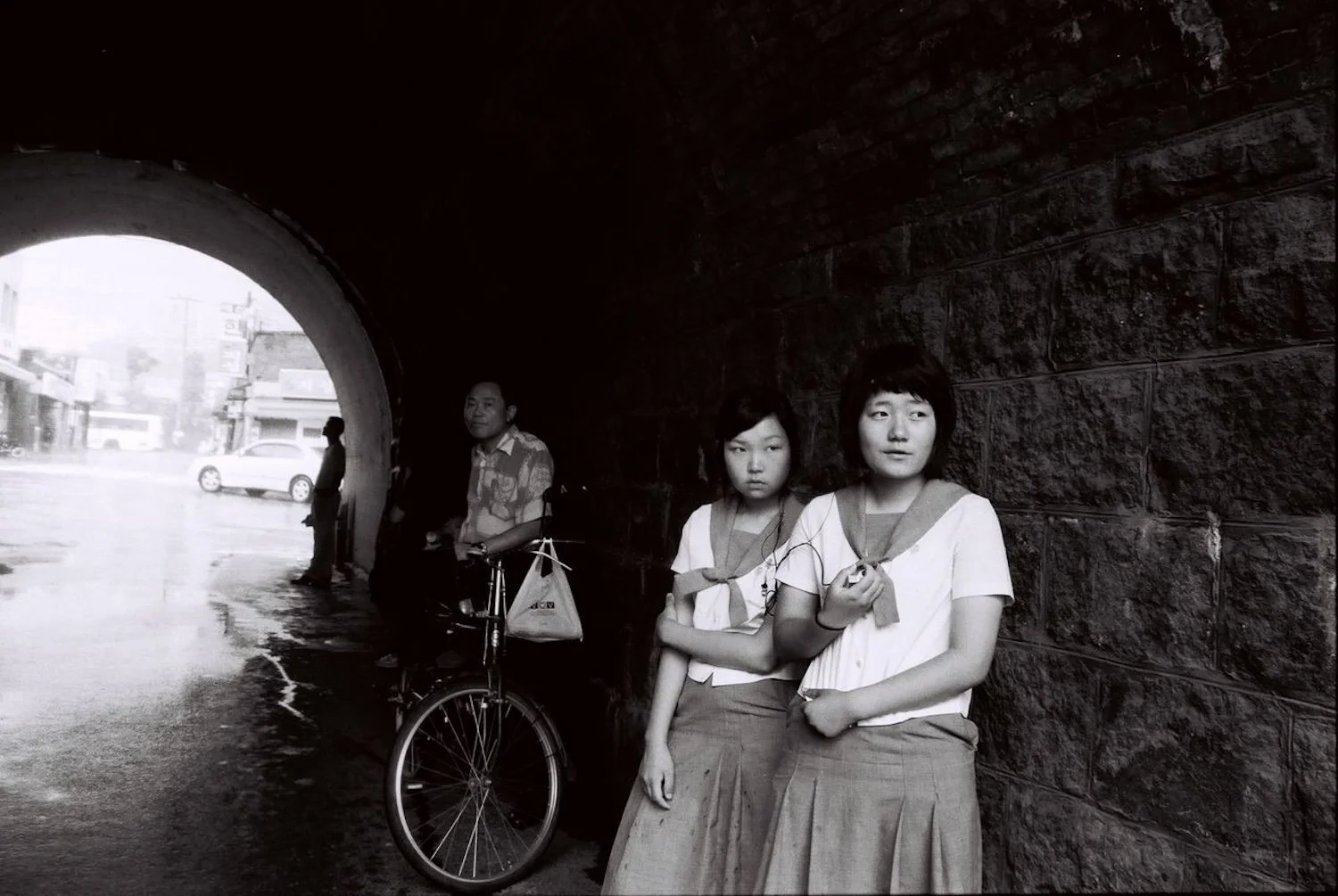
Back in that 2002 sonaigi, I hadd made it almost home when i ran under that bridge in Gongdeok, where I found all sorts of fellow, temporary rain refugees waiting on the last of the shower to finish out before scurrying home.
Zoom out, and the official record says it rained that day — technically, all day and half the night. Zoom in, and the lived experience was closer to: dry from 3 p.m. until 10, with two short windows of real rain in between. The forecast and the actual, livable day are two different documents, and only one of them is useful for planning a shoot.
This isn't just a meteorological pattern — it's embedded deep enough in the culture to have its own literature. Korean schoolchildren grow up reading 소나기 (Sonagi, "The Shower"), Hwang Sun-won's canonical short story about a boy and girl whose entire fleeting relationship unfolds around a sudden summer downpour — required reading for generations, and one of the most widely known works in modern Korean fiction. The rhythm of the sonagi isn't something Koreans learn from a weather app. It's absorbed early, through story, and it shapes how the whole country moves through summer: not by cancelling plans the moment rain shows up, but by knowing it'll very likely clear soon enough to keep going.
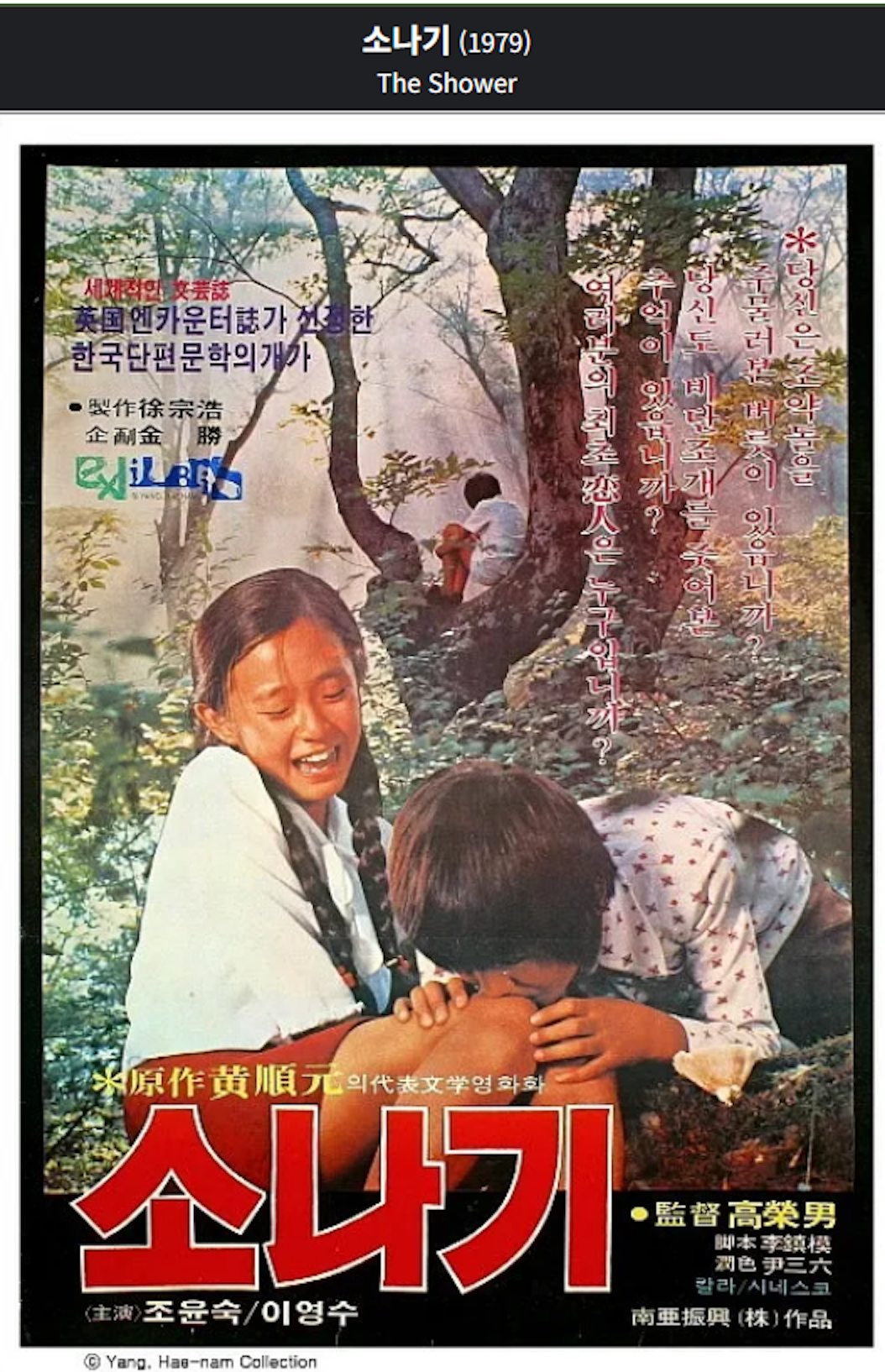
This classic Korean short story has been retold and remade as films, animated shorts, and on television countless times. In Korea, you gotta know how to handle a sonagi.
Someone who's shot through a dozen monsoon seasons doesn't panic at a rain icon. They just shift the schedule and still get the shot everyone else assumed was cancelled.
That same instinct extends past the sky. Getting a shot in an unusual spot — talking a market ajumma into allowing any frame at all, or reading in half a second whether a café owner is about to wave you off or wave you in — isn't a script either. It's mapped territory: pop-up spaces built around being photographed are wide open, independent cafés are a coin flip depending on how the owner feels about Instagram that particular week, and some spots will quote a daegwanbi — a venue fee, sometimes running into the thousands of dollars — before you've even finished asking.
None of this is a knock on amateurs, for the record. Plenty of them are talented, generous with their time, and worth working with — if rolling the dice sounds like part of the fun to you, genuinely, go for it. But it's worth asking yourself honestly: how much do you actually want a nearly guaranteed, magazine-level outcome, versus being fine with maybe not getting one? Because maybe you will. It might turn out perfect, and you walk away with a mag-quality shoot for free. But maybe you won't. And on a single trip, with one real shot at this city, "maybe" is a genuine bet to be making.
That map doesn't come from a guidebook. It comes from literally pounding the pavement, for years, as a matter of practice. This is a visual sociologist's habit as much as a photographer's — the same instinct behind Seoul Shootouts, an ongoing project that spends a full month embedded in a single Seoul neighborhood at a time before moving to the next: shooting, watching, learning how a place actually works, not how it photographs on a map. Twenty-six months deep — one neighborhood at a time — and still going. That's not a hunch. That's years of scouring this city on foot, block by block, long enough to know exactly which door opens and which one doesn't.
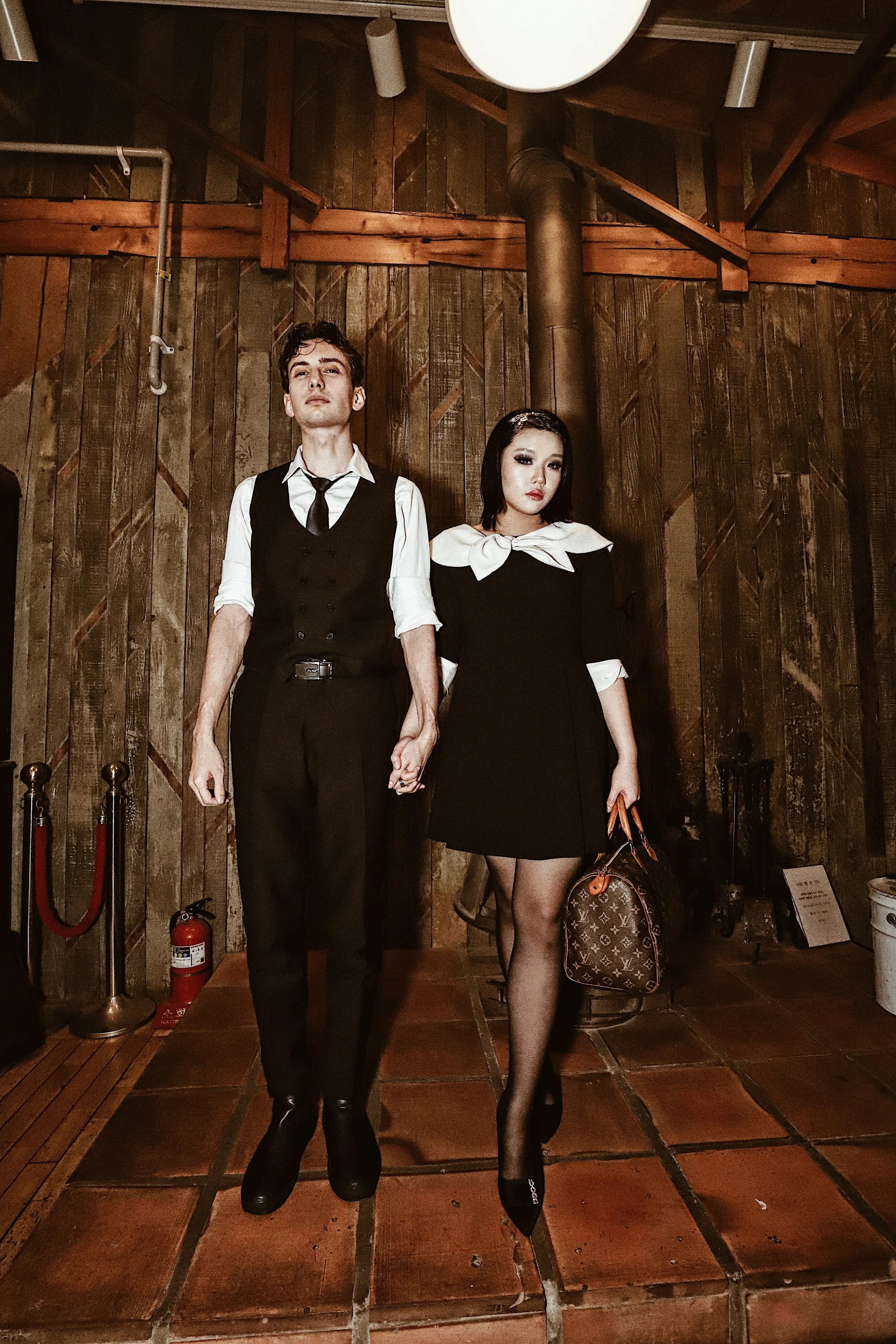
Knowing how to navigate Korean commercial spaces against the technical requirements of the shot ( in this case, a large, external, studio flash with a large bulb to offer a magaziney, diffused light) means knowing not just the law but Korean social norms, along with the specific staff and owner vibes of a place. Here in brunch Cafe Maybe in the unlikely area of Guro Digital Complex station, the staff is both hands-off and (perhaps purposely) aloof, so I knew we could pop off a few shots real quick and no one would even look at us sideways, from experience occasionally doing just this.
That's the difference between reading a forecast and knowing a climate.
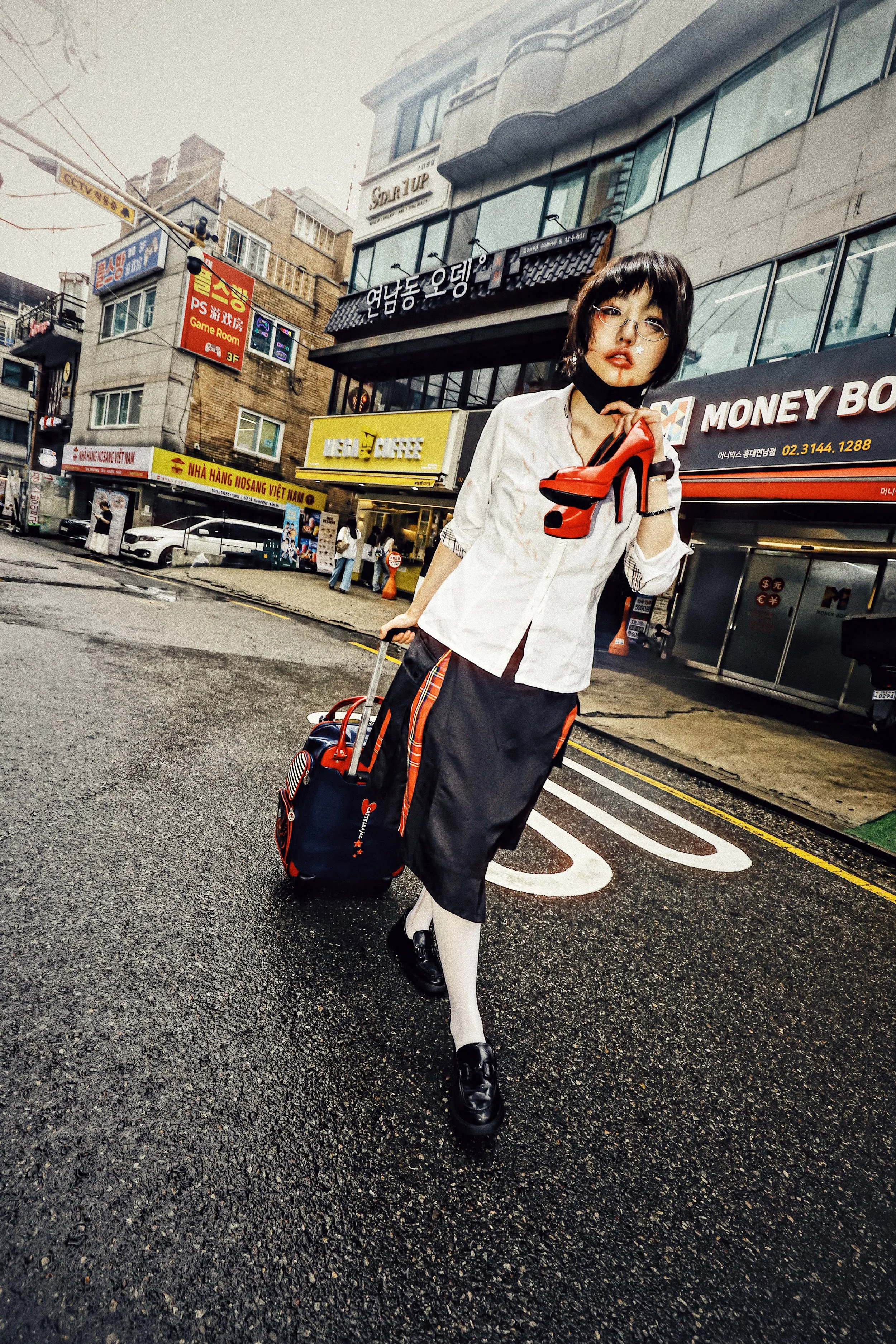
Model @sio.show and I move out after a midday, mid-July sonagi finishes its watery assault, only to be followed by bone-dry weatrher until the late evening, leaving us ample time to shoot.
What "The Shot" Actually Costs
Run the math on what a trip to Seoul usually includes: flights, hotel, a few nights out, the shopping that always runs over budget. Against that total, a single, fully planned, professionally directed photo session — the kind that produces images someone will actually want to look at in ten years — isn't the expensive line item. It's often smaller than what gets spent on two good dinners. Our photo shoot is more than just another shoot with lots of “snaps.” It is a planned, purposeful editorial photography excursion with an experience spatial, cultural, and photographic guide.
And unlike the dinners, the experience doesn't disappear by morning. Everything else on a trip gets consumed and forgotten. The photos are the only part that keeps working — for years, not days.
The Kill Shot Philosophy
The package name isn't an accident. A kill shot isn't the result of firing a hundred times and hoping one even lands on target. It's the result of thoughtful planning beforehand, which meets highly specialized knowledge of the field — the scouting, the timing, the prep — so that when the moment actually arrives, there's nothing left to figure out. You know to literally just take the shot.
That's the whole premise behind a properly planned Seoul session: a pre-trip consult to map the vibe and the locations together, decades of fieldwork instead of guesswork, someone who reads the weather instead of surrendering to it, and a shoot that happens whether or not the forecast cooperates. Four hours. One plan. Results that don't look like everyone else's feed.
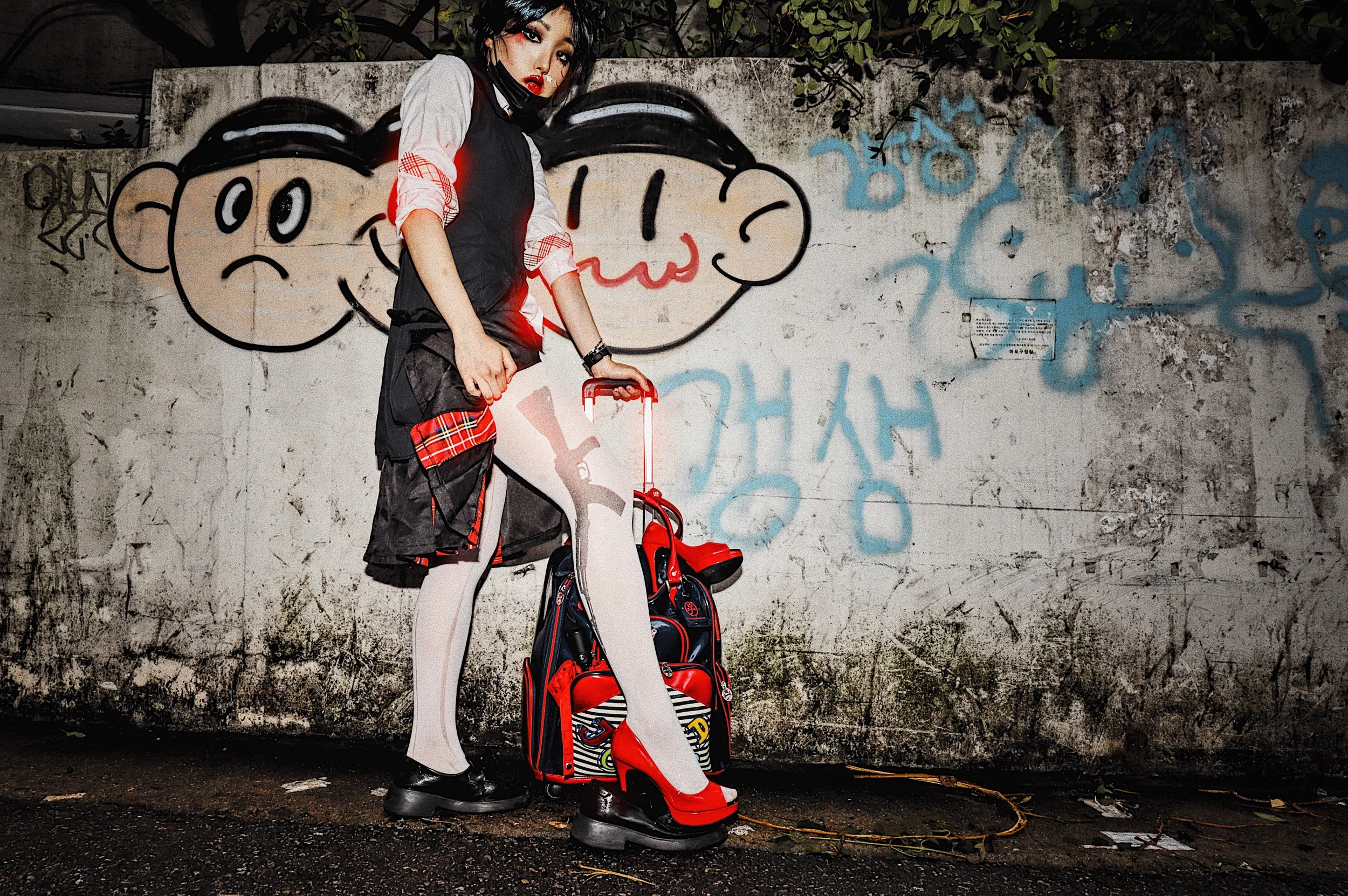
Model @sio.show brings her sartorial concept to life in the heart of über-trendy Yeonnam-dong. Posing and exposing her gun just after the rain stopped, she perfectly captures the dark mood of “a student ideating violence,” which is framed against an ironic backdrop: a gritty alley wall spray-painted with the word Gaengsaeng (갱생)—meaning "rebirth" or "rehabilitation," but against her modeling and concept, might even beloosely and creatively interpreted as “gang life.”
Every picture is a kill shot. The only question is whether it's planned that way — or hoped into existence at 11 p.m. the night before the flight home. Book us to guarantee you leave back to home with the absolutely killer image you actually came to Seoul for.